Address
304 North Cardinal St.
Dorchester Center, MA 02124
Work Hours
Monday to Friday: 7AM - 7PM
Weekend: 10AM - 5PM

Address
304 North Cardinal St.
Dorchester Center, MA 02124
Work Hours
Monday to Friday: 7AM - 7PM
Weekend: 10AM - 5PM

The Convair B-58 Hustler is a useful reference point for how technology is supposed to work. Mach 2, sleek, briefly terrifying, and gone inside a decade once its specific rationale evaporated. A tidy object lesson in the lifecycle of a weapons system: concept, deployment, obsolescence, museum.

The problem is that this is not actually how most defence hardware works. Some of it, when designed with a particularly stubborn combination of engineering conservatism, institutional inertia, and genuine operational relevance, simply refuses to leave. It gets upgraded. It outlives its replacement. It turns up in mission reports for conflicts its designers never anticipated, in theatres that didn’t exist when the specifications were written.
What follows is a survey of Cold War systems that are, improbably, still on the job. Some are winding down. Others appear to have no intention of going anywhere at all. We find this, on balance, both impressive and slightly unnerving.
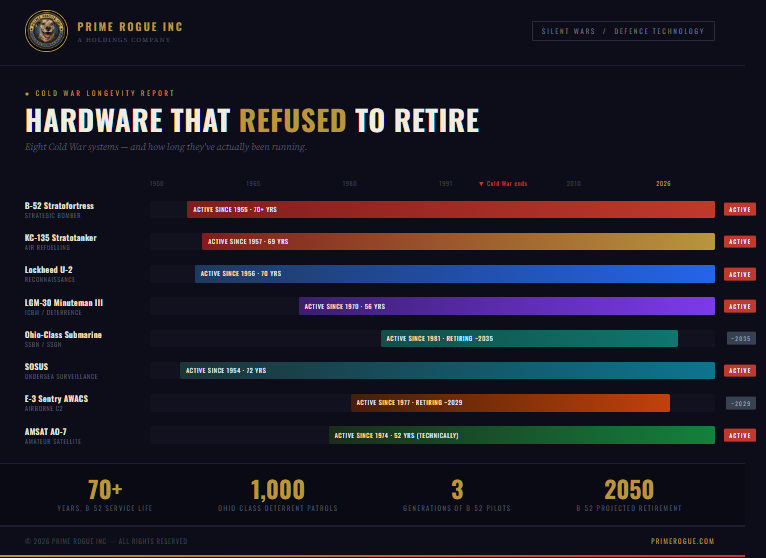
The U-2 is, by any reasonable accounting, an aircraft that should not still exist. She was designed in the early 1950s as a high-altitude surveillance platform for a specific geopolitical moment — and then she kept going, through the Gary Powers shootdown that caused a diplomatic incident of genuine consequence, through roles with NASA monitoring atmospheric conditions, through the retirement of her supposed successor the SR-71 Blackbird in the mid-1990s.
The Blackbird was faster. The Blackbird was also retired. The U-2 kept flying, gathering intelligence at altitudes where the margins between cruise speed and stall speed are narrow enough to concentrate the mind considerably. The emergence of modern reconnaissance satellites has diminished her importance, but she remains in service, which is either a tribute to the original engineering or a commentary on the difficulty of replacing things that work.
Possibly both.
![A photo of the U-2 Dragon Lady mid-flight. By United States Department of the Air Force - Defense Visual Information Center (1998). A DoD CD-Rom Image Collection: Best of the US Air Force. [1][2], Public Domain, https://commons.wikimedia.org/w/index.php?curid=55114](https://primerogueinc.com/wp-content/uploads/2026/06/lockheed-u2-plane-cold-war-tech-1024x684.jpg)
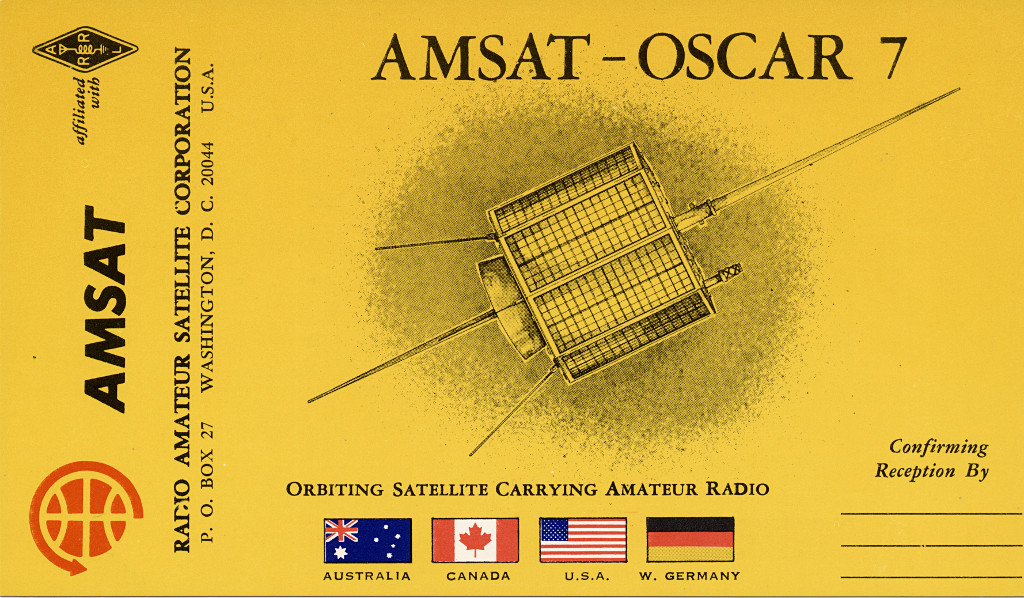
In the pre-internet world, amateur radio operators were doing things that most people would now find difficult to explain without sounding like they’re describing a parallel universe. The Radio Amateur Satellite Corporation — AMSAT — was launching amateur-designed satellite systems into orbit by hitching rides on NASA’s launch schedule. AO-7 was among the more capable of these early systems, featuring a functional radio transponder that enabled communications during the Polish revolution.
Then it went dark.
Then, decades later, a short in the spacecraft’s electrical system brought it back. The satellite now operates erratically, requires handling with a certain gentleness of approach, and remains — at an age that would be remarkable for a living organism — technically capable of rebroadcasting radio transmissions. This is either heartening or serves as a warning about the persistence of objects we’ve lost track of. Possibly both, again.
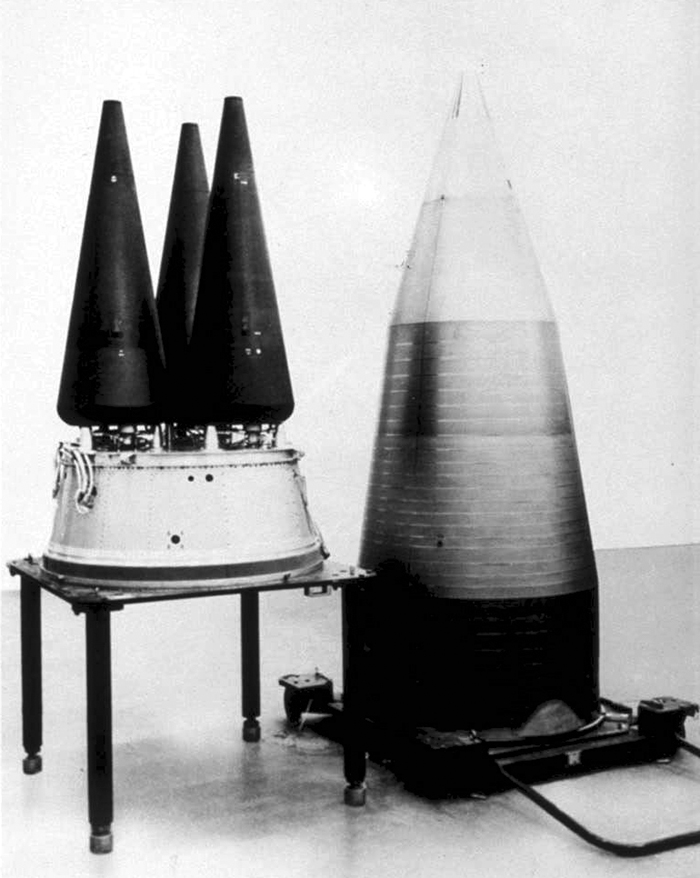
Early ballistic missiles were, to put it charitably, not confidence-inspiring. Large, liquid-fuelled, temperamental, and requiring extensive preparation before use — qualities that are acceptable in a commercial enterprise and significantly less so in a nuclear deterrent. The Minuteman programme was built around a fundamentally different proposition: solid-fuelled, hardened, and designed from the outset for the kind of long-term reliability that deterrence actually requires.
The design was good enough that the United States built its land-based nuclear deterrent around it, and the Minuteman III continues to fulfil that role more than three decades after the Cold War’s formal conclusion. Modernisation plans exist, and the Ground Based Strategic Deterrent is the designated successor. The Minuteman, characteristically, remains operational in the meantime.
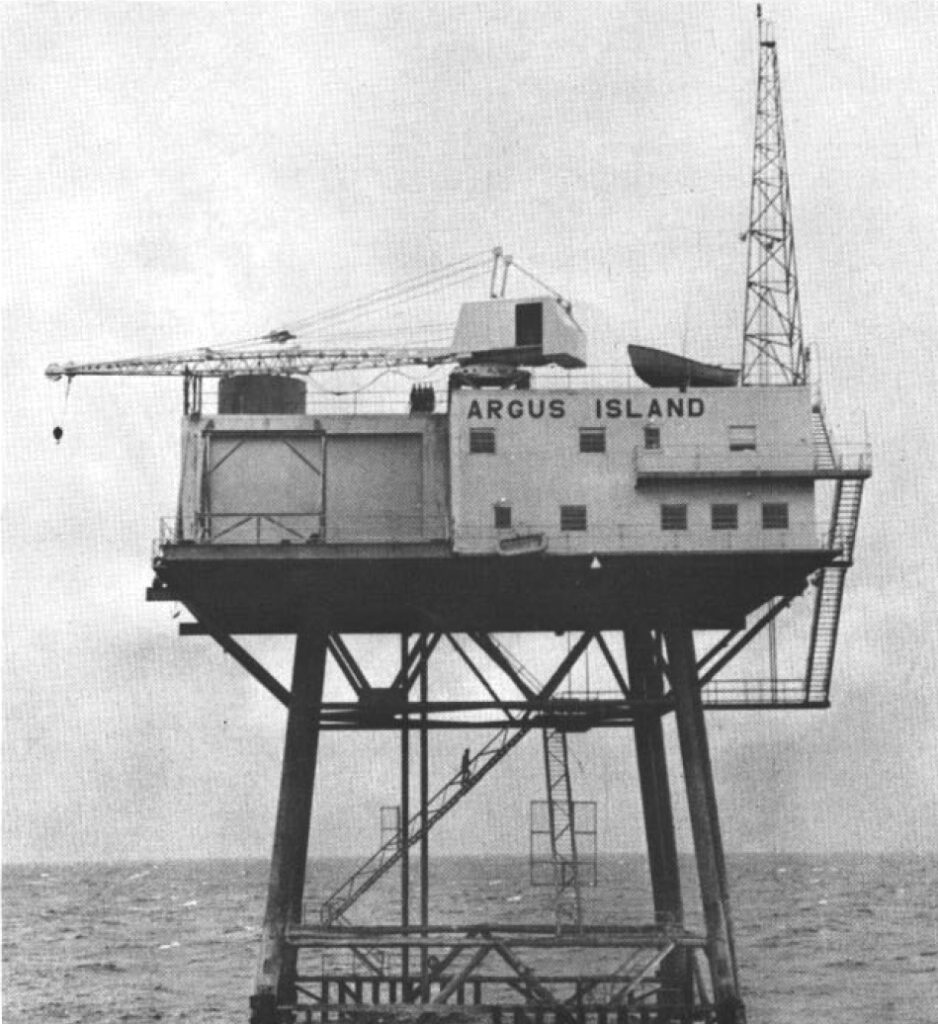
SOSUS is the kind of system that sounds straightforward in description and becomes more impressive the longer you consider its operational history. A network of hydrophones on the seafloor, recording acoustic signatures and passing them on for analysis — a LOFARgram, in the technical vocabulary — that enabled the regular tracking of Soviet submarines well into their missions, near ports, chokepoints, and points of strategic interest.
The modern SOSUS bears limited resemblance to its Cold War configuration, having been updated to remain relevant to contemporary adversaries and contemporary acoustic environments. The underlying logic, however, remains intact: the ocean is not as opaque as submarines would prefer, and patient listening at scale continues to yield actionable intelligence. The system endures.
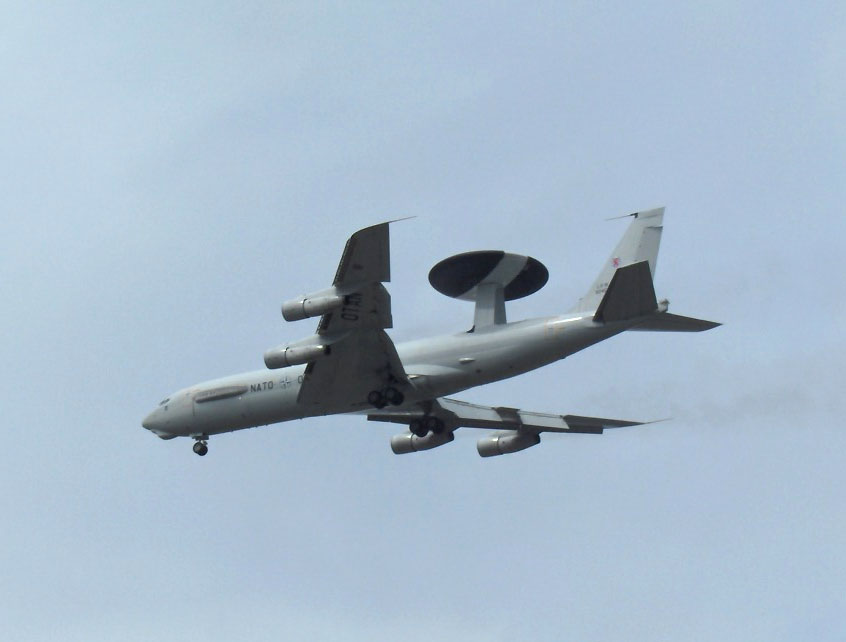
The E-3 Sentry is, at its structural core, a Boeing 707 passenger jet — a commercial airframe whose last new-build example rolled off the line decades ago — with a 30-foot rotating radar dome bolted to the top. By any normal assessment of what constitutes a current-generation military platform, this should be disqualifying.
And yet. Business Insider reported in mid-2025 that NATO AWACS crews described their aircraft as “an aging aircraft, but still relevant” — one that was “always the first to deploy” when conflicts emerged, and that was flying “around the clock” in the early days of the Ukraine war. The interior reportedly gives off what crew members called “Cold War relic vibes.” The radar, upgraded repeatedly over its service life, provides 360-degree coverage out to more than 200 miles.
The USAF began retiring E-3s in 2023, reducing the fleet to 16 aircraft while the Boeing E-7 Wedgetail is developed as a replacement. Testing on the E-7 has already slipped to 2028. The E-3, characteristically, will keep flying in the interim. It has done this before.
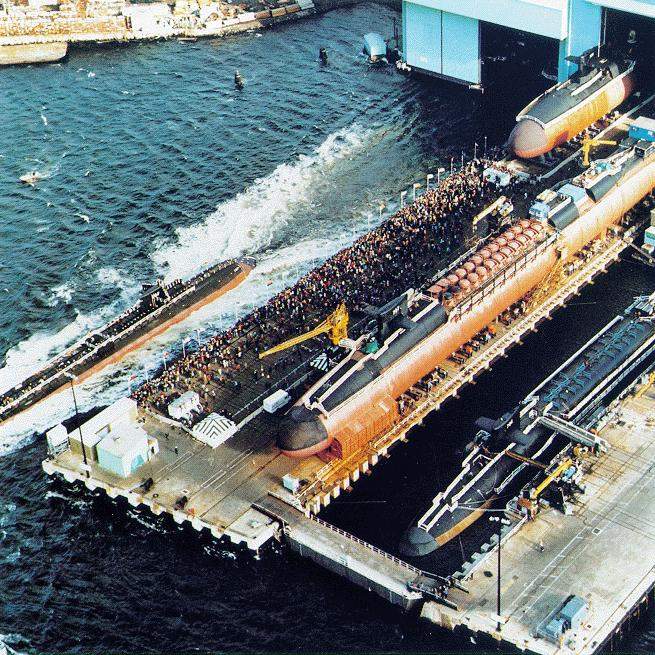
Conceived in the early 1970s as the US Navy’s answer to the question of what survivable nuclear deterrence looks like at sea, the Ohio class entered service in 1981 and has been there ever since. The design logic was straightforward and remains so: a submarine that is essentially undetectable, operating in remote ocean regions, carrying enough nuclear capability to constitute an existential threat to any adversary who might contemplate a first strike.
In February 2025, the Ohio-class fleet completed its 1,000th strategic deterrent patrol — more than four decades of continuous, unbroken nuclear deterrence at sea. Four hulls were converted post-Cold War from ballistic missile submarines to guided-missile platforms carrying up to 154 Tomahawk cruise missiles each, a post-Cold War judo move that produced one of the more capable conventional strike assets in the US inventory.
Those four SSGNs are now scheduled for retirement by 2028, creating what analysts have described as a “significant firepower gap” that Virginia-class submarines will struggle to fill. The ballistic missile SSBNs, meanwhile, are expected to continue deterrence patrols into the 2030s before the Columbia class takes over. For a platform designed during the Ford administration, this represents a remarkably long operational arc.
The Ohio class will have been, by the time it’s done, one of the most consequential submarine programmes in history. It was also built during the same decade as the Sony Walkman.
The saying goes that no one kicks anything without tanker gas, and the KC-135 has been providing that gas since the Eisenhower administration. The airframe is, by any polite description, dated. The flight deck and avionics have been modernised. The engines have been re-engined. The fundamental proposition — a large, reliable platform that can transfer fuel to other aircraft at altitude — has not required updating because the laws of physics that make aerial refuelling necessary have not changed.
The Pacific theatre has placed new emphasis on range, which has accelerated the search for successor tanker assets. Until those designs reach operational numbers, the Stratotanker will keep doing what it has been doing since the 1950s, which is keeping everyone else in the air.
It has outlived at least one intended replacement. In this, it is in distinguished company.

The B-52 is not fast. It is not stealthy. Its handling characteristics are not what you would design for if you were starting from scratch today. What it is, with rather elegant simplicity, is a large, long-range platform that can put missiles in the air from a considerable distance — which is, it turns out, precisely what a modern missile war requires.
The B-1 is scheduled for retirement. The B-2 is approaching that same reckoning in the coming years. The B-52 — which has been flown by three generations of pilots during a service career exceeding seventy years — will still be there. It will receive new engines. It will carry new weapons. It will continue performing the role of what some analysts have called a “cheap and affordable missile truck,” which is an unglamorous description for something that has become structurally irreplaceable.
The aircraft’s projected service life now extends to 2050. This means that some of the pilots who will fly the B-52 at its retirement were not yet born when the aircraft was already considered elderly. There is probably a useful lesson in this about the relationship between institutional longevity and genuine operational relevance, but we’ll leave that as an exercise for the reader.
![A photo of a B-52 during Operation Epic Fury By [null Courtesy] - This image was released by the United States Department of Defense with the ID 260326-D-D0477-8752 (next).This tag does not indicate the copyright status of the attached work. A normal copyright tag is still required. See Commons:Licensing.العربية ∙ বাংলা ∙Bahaso Jambi ∙Deutsch ∙ Deutsch (Sie-Form) ∙ English ∙ español ∙ euskara ∙ فارسی ∙ français ∙ italiano ∙ 日本語 ∙ 한국어 ∙ македонски ∙ മലയാളം ∙ Plattdüütsch ∙ Nederlands ∙ polski ∙ پښتو ∙ português ∙ русский ∙ slovenščina ∙ svenska ∙ Türkçe ∙ українська ∙ 简体中文 ∙ 繁體中文 ∙ +/−, Public Domain, https://commons.wikimedia.org/w/index.php?curid=187741654](https://primerogueinc.com/wp-content/uploads/2026/06/B-52-cold-war-tech-1024x681.jpg)
What unites these systems is not longevity for its own sake. It’s that each was designed around a problem that turned out to be more durable than the geopolitical context that produced it. Nuclear deterrence still requires survivable second-strike capability. Aerial refuelling still requires tankers. Airborne early warning still requires something watching the airspace. The Cold War’s ideological framework dissolved. The operational requirements it generated, largely, did not.
The hardware that recognised this — or was built in ways that made adaptation possible — is still here. The hardware that didn’t is in museums. Sometimes the most forward-looking thing a designer can do is build something that will still work in a future they couldn’t predict.
The B-52 is probably going to be flying in 2050. Think about that for a moment.
 We Were Never in Your Court: On the Tactical Refusal of Bureaucratic Norms in Adversarial Systems Work
 MAGA Was Never Unified (Part 1 of 5): First-Term MAGA Fractures | Prime Rogue Inc.
 NATO at a Crossroads: Danish F-16 Instructor’s Death in Russian Strike – Complete Strategic Analysis
 Dassault Rafale vs. F-35, Eurofighter vs. F-35: Can Europe Break Free from U.S. Airpower?



[…] existence of nuclear weapons adds a layer of complexity to the assessment of future wars. The potential for nuclear conflict, […]
[…] both countries could be looking at economic and environmental disaster. And this time, there’s no Cold War-era goodwill to keep things […]
[…] unverifiable theory links UVB-76 to Russia’s so-called “Dead Hand” or Perimeter system—a Cold War-era automated nuclear retaliation protocol. In this view, the Buzzer exists as part of a […]
[…] is a Cold War-style power struggle where one side (China) used economic tools instead of military force, […]
[…] a succession that has the formal structure of Islamic governance and the operational reality of a military junta — is absorbing pain that would have broken any government with a functioning social […]
[…] – a stark visual of allied frustration just before Trump blew up the summit’s consensus. From Cold War showdowns to current great-power rifts, leaders’ tactical exits send potent psychological and […]
[…] operates under a semi‑presidential system where the president appoints the prime minister to run domestic affairs. After winning re‑election in 2022, President Emmanuel Macron called a snap […]
[…] a tool the Russian state picks up occasionally. It’s closer to a default operating system that happens to have a military module, alongside a diplomatic module, an economic-statistics module, and a domestic-press module, […]
[…] use standard Node.js APIs. They’re built for routing and lightweight transformations, not for running a login system for a multi-jurisdiction voter mobilization platform. auth.10xvotes.com runs on serverless […]
[…] The second was the Jared Kushner-Gary Cohn globalist project: free trade maintenance, immigration flexibility on skilled workers and visa programs, institutional norm preservation, and the kind of transactional pragmatism that prioritized stock market performance over populist symbolism. Cohn, the former president of Goldman Sachs serving as National Economic Council director, was in ideological terms closer to Barack Obama’s economic advisers than to Steve Bannon. His presence in the same White House as Bannon was not a synthesis. It was a cold war. […]
[…] idea actually has Cold War roots. Reportedly, Soviet intelligence monitored quirky clues like late-night office lights and […]
[…] its own election (after a national postponement) and openly challenged the central authority. A military confrontation in November 2020 ignited the devastating Tigray War. Federal troops, allied with Amhara regional forces and Eritrea (now an external actor but with […]
[…] As one human rights watchdog observed two weeks ago, “President Donald Trump’s use of the military domestically is dangerous and deeply misguided.” With today’s order, the United States has taken a decisive step into uncharted territory: soldiers patrolling […]
[…] isn’t just Trump “fighting back.” It’s an open war on the legal system. A declaration that independent prosecutors and constitutional attorneys are to be viewed not as […]
[…] It redefined stealth, supercruise, and aerial agility — a technological apex predator built for a Cold War that had already ended. But the F-22 program was killed early, with just 187 airframes ever […]
[…] The evolution of infrastructure warfare in the strategy of the War in Ukraine carries profound implications for how nations must approach the protection of their critical systems in an age of precision warfare. Even though Russia has achieved successes […]
[…] Additionally, the concept of containment has shaped geopolitical thinking. This strategy focuses on preventing the expansion of hostile nations or ideologies. It was notably employed during the Cold War. […]
[…] occurs, and which systems are active provides actionable intelligence about operational tempo and military […]
[…] nuclear weapons. Forget aircraft carriers. The wars of the future won’t be fought with traditional military […]
[…] country’s long post-Cold War vacation from hard power is […]
[…] strength are no longer separate domains—they are becoming one and the same. The post-Cold War illusion of global stability has shattered, and in its place, nations are arming themselves for an […]
[…] the Vatican has played a role in intelligence operations throughout history—ranging from Cold War diplomacy to monitoring religious persecution—its methods are far more discreet than those of […]
[…] aggression in Ukraine—marking a historic fracture in Western unity. For the first time since the Cold War, Washington aligned publicly with Russia, Belarus, North Korea, and other authoritarian states on a […]
[…] Fast-forward to 2025, and Libya remains divided despite the nominal unity government. Al-Haddad has spent five years trying to consolidate what passes for a Libyan military while managing Turkey’s growing influence. Turkey deployed forces to Libya in 2020, provided the Bayraktar TB2 drones that turned the tide against Haftar’s 2019 Tripoli offensive, restructured GNA forces into something resembling a coherent fighting force, and established a military presence that continues today. […]
[…] decades, our intelligence posture has operated on a Cold War hangover: assume threats are external, assume they arrive in trench coats, and assume someone in […]
[…] in history. Whether lurking beneath the Pacific during World War II, shadowing enemy vessels in the Cold War, or playing a pivotal role in fictional global conflicts, submarines have remained a symbol of […]
[…] the referendum crisis. The city has been a target of foreign economic espionage since at least the Cold War era, when Soviet intelligence prioritized understanding Western energy infrastructure, pricing […]
[…] on with performative joint statements – a hasty declaration that Iran “can never have a nuclear weapon” was released before Trump bolted – but the damage was done. The image of cohesion was […]
[…] to close Hormuz is the single most consequential leverage play available to Tehran short of nuclear weapons use, and they exercised it immediately. That decision is not the behavior of a government on the […]
[…] Cyberwarfare is another highly probable retaliation. Iran has previously launched successful attacks on U.S. financial institutions, Saudi oil infrastructure, and global networks. A well-coordinated cyberattack could disrupt banking systems, energy markets, or military communications—all without crossing the line into outright war. […]
[…] aid to Cambodia, and the U.S. might publicly back Thailand’s right to self-defense, raising Cold War-like overtones. In-country, nationalist fervor would be at a fever pitch; Thailand might see […]
[…] in national security and law enforcement contexts. Originating in the United States during the Cold War, this evasive formula allows agencies to answer information requests with a non-answer: “We can […]
[…] Cold War Traditional HUMINT Intelligence agencies relied on face-to-face recruitment through embassy […]
[…] a policy of “nuclear opacity,” signalling to friends and foes alike that it possesses nuclear weapons while refusing any transparency. By conservative estimates, Israel has built roughly 80 to 200 […]
[…] independent nations that refuse to be subordinate to superpowers. The F-35, on the other hand, is a system designed to keep America’s allies dependent on Washington’s military-industrial […]
[…] while it’s tempting to blame politics, budgets, or post-Cold War complacency, the root rot started with Turner. He made the CIA bureaucratically respectable — and […]
[…] militarized atoll deep in the Indian Ocean. Often overlooked in public discourse, Diego Garcia is a Cold War relic with outsized relevance in 2025: a hardened, sovereign U.S. base leased from the U.K., far […]
[…] Produces its own small arms, vehicles, and defense systems to maintain military self-sufficiency.✅ Diversifies defense procurement with European, South Korean, and domestic […]
[…] is the timing, and what nobody in the wall-to-wall coverage is asking out loud: who is actually running two active American war files this […]
[…] hundreds of meters of error over a long flight in a GPS-denied environment. On a five-mile island where the distance between a military target and the oil export terminal may be measured in hundreds of meters, that drift is not an […]
[…] undermined by growing international condemnation, which increasingly questions whether Israel’s military actions cross the line into war crimes. At the same time, internal critics argue that Netanyahu’s focus on military […]
[…] the decades after the Cold War, Europe mothballed its bunkers, tossed out its iodine tablets, and papered over its fallout shelter […]
[…] Canada would need to decide whether to deepen its security integration with a European nuclear umbrella or rely solely on its limited self-defense capabilities. Given its immense uranium deposits and advanced civilian nuclear industry, Canada might even consider leaving the NPT to develop its own nuclear weapons. […]
[…] On February 27, Trump said he was “not happy” with negotiations. Talks were running parallel to military preparation, not as an […]
[…] Prince Mohammed bin Salman (MBS) is wary of a full-scale U.S.-Iran war but would support targeted U.S. strikes on Iran’s missile sites and military assets.✔ The UAE and Oman will likely attempt diplomatic mediation to prevent regional economic […]
[…] writing on the wall. They’ve ramped up defense spending, with Germany abandoning its post-Cold War pacifism and France pushing for a European military-industrial […]
[…] relevant here: every state actor with skin in the Hormuz Cycle, Tehran, Washington, Jerusalem, is running a public-narrative operation in parallel with the military and economic ones, and reading the trade and shipping data in isolation from the messaging layer […]
[…] gap from the 1960s until it was decommissioned in 2007. Its closure signaled the lull of post-Cold War optimism. But security planners now view that as a gap to be remedied. With Russia’s resurgence, […]
[…] next few weeks will determine if this remains a Cold War-style standoff—or explodes into a full-blown military […]