Address
304 North Cardinal St.
Dorchester Center, MA 02124
Work Hours
Monday to Friday: 7AM - 7PM
Weekend: 10AM - 5PM

Address
304 North Cardinal St.
Dorchester Center, MA 02124
Work Hours
Monday to Friday: 7AM - 7PM
Weekend: 10AM - 5PM
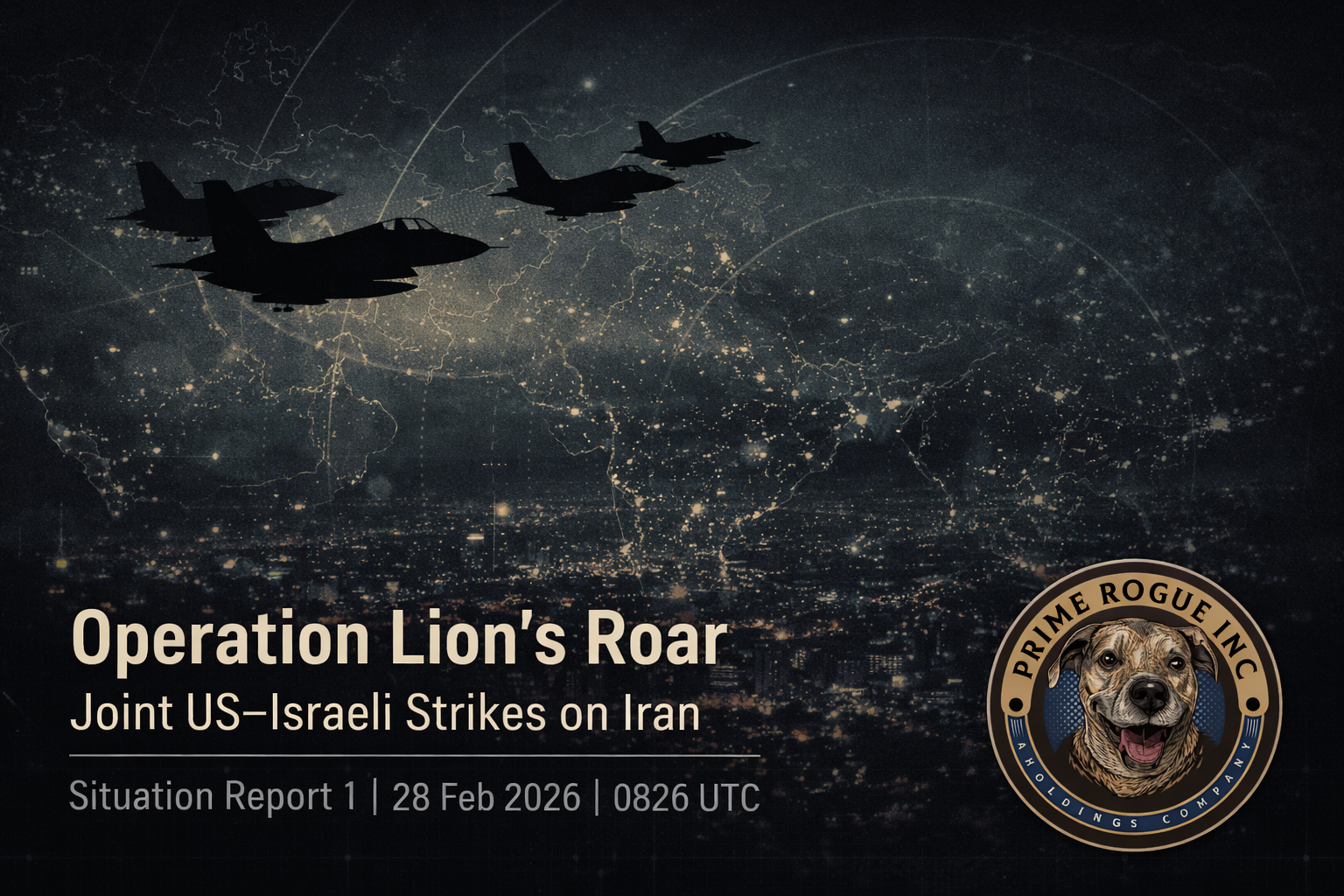
Operation Lion’s Roar has begun as joint US-Israeli military strikes against Iran are confirmed and ongoing. This is not rumor. President Trump confirmed via Truth Social video. Israeli Defense Minister Israel Katz made an official declaration. Multiple named US officials confirmed to Reuters, NBC, CNN, and AP. Iranian state media reported explosions across Tehran.
The operation — codenamed Lion’s Roar by Israel — represents the largest joint military operation in the Middle East since the 2003 Iraq invasion. Trump explicitly stated: “The United States military began major combat operations in Iran.” He called for regime change, warned of potential American casualties, and vowed to “annihilate their navy.” Iran has promised “crushing” retaliation but has not yet launched.
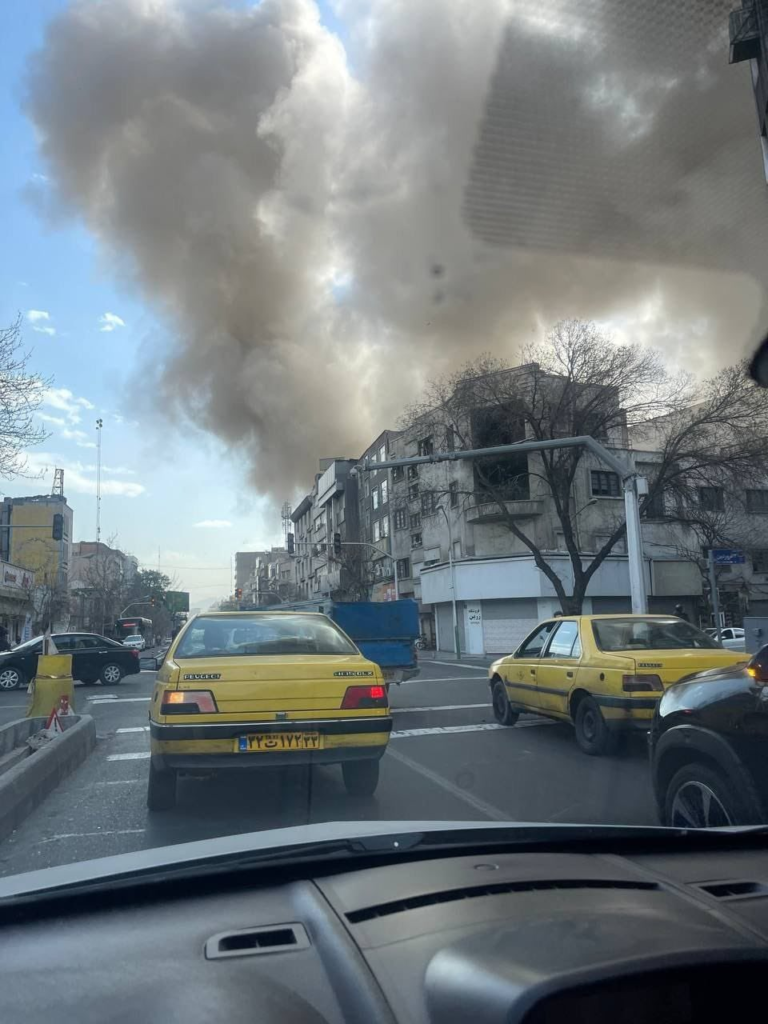
Targets confirmed by Iranian state media, AP correspondents on the ground, and Israeli Channel 12:
Tehran strikes concentrated on regime and military infrastructure. The first confirmed impact hit near the offices of Supreme Leader Khamenei. Additional confirmed Tehran targets include the Iranian Ministry of Intelligence, Ministry of Defense, Atomic Energy Organization of Iran, Parchin Military Complex (19 miles southeast of Tehran), the Pasteur district near the Presidential Palace, and the homes of ministers and military chiefs.
Beyond Tehran, strikes confirmed in Isfahan (nuclear hub), Qom, Karaj, Kermanshah, Tabriz, Lorestan, and Ilam province.
Weapons: IDF stated “dozens of IAF jets completed the first stage.” US participation confirmed “by air and sea” — strongly implying submarine-launched Tomahawk cruise missiles alongside air-delivered munitions. Reports of cruise missiles over Iraqi airspace are consistent with TLAM flight profiles from Arabian Sea launch positions toward central Iran. Israel does not operate Tomahawk missiles — these are American.
Cyber dimension: Confirmed cyberattacks caused severe disruptions to Iranian news agencies, mobile applications, and cell phone communications across Tehran.
Key personnel: Khamenei was NOT in Tehran — transferred to a secure location days before the strike. President Pezeshkian reported alive and unharmed. Israeli media claimed Iranian Army Commander-in-Chief Amir Khatami was killed — unconfirmed.
Defense Minister Katz signed a declaration of “special and permanent state of emergency” across all of Israel. He warned explicitly: “A missile and UAV attack against the State of Israel and its civilian population is expected in the immediate time frame.”
The Home Front Command activated a nationwide alert. All Israeli regions moved to Essential Activity Only — schools, public gatherings, and non-essential workplaces shut down. Israeli airspace closed to all civilian flights. A mass reserve call-up was issued, including infantry forces for the northern border with Lebanon.
Simultaneously, the IDF struck Hezbollah launch positions and underground shafts in southern Lebanon — specifically to “disable Hezbollah’s detection capabilities” before the main operation. This preemptive degradation of Hezbollah sensors indicates a well-planned, multi-front operation months in the making.
The US Embassy in Jerusalem had authorized departure of non-emergency personnel on February 27 — one day before strikes.
The IRGC vowed “a powerful and precise response targeting the interests and infrastructure of the Zionist regime and its allies” and specifically warned that US bases in the region represent “vulnerability, not strength.”
Iran’s retaliatory capability is degraded but still dangerous. The June 2025 12-Day War destroyed nearly all S-300 air defense systems and 70+ air defense batteries. Iran’s missile inventory dropped from approximately 2,500 pre-war to an estimated 1,000-1,500, with only around 100 serviceable mobile launchers remaining. Iran still possesses Shahed-series drones, short-range ballistic missiles, and cruise missiles. The most immediate threat vector is strikes on US bases — Al Udeid Air Base in Qatar, plus installations in Bahrain, Kuwait, and Iraq.
Proxy activation is the wild card. Hezbollah stated pre-strike that it “will not intervene militarily” for “limited” strikes — but the February 28 operation’s proximity to Khamenei’s office may have crossed that threshold. IDF’s mass reserve deployment to the northern border confirms they assess Hezbollah activation as a real risk.
This is not a supporting role.
Naval forces: Two carrier strike groups deployed. USS Abraham Lincoln in the Arabian Sea with Carrier Air Wing 9. USS Gerald R. Ford off Israel providing cover and air defense. At least 16 ships in the CENTCOM AOR excluding submarines. 41% of all Navy ships ready for operations are in or around the Middle East.
Air forces — largest deployment since Iraq 2003: 150+ aircraft shifted to the region since February 17 alone. Key deployments include 12 F-22 Raptors to Israel’s Ovda Airbase (first-ever US offensive weapons deployment in Israel), up to 36 F-15E Strike Eagles to Jordan, 30 F-35A Lightning IIs to forward bases, plus AWACS, tankers, and electronic warfare aircraft at Prince Sultan Air Base in Saudi Arabia.
Logistics: Over 270 C-17/C-5 transport flights tracked heading to the region since mid-January. The C-17s departing back to Europe represent repositioning of emptied aircraft, not withdrawal — a logistics cycle.
New capability: The Pentagon’s Task Force Scorpion — CENTCOM’s first kamikaze drone unit using LUCAS drones reverse-engineered from Iranian Shahed-136 technology — was declared operationally ready on February 26. Two days before the strikes.
The sustainability problem: Two US military officials stated pre-strike that despite the buildup, the Pentagon could sustain strikes for only 7 to 10 days. This is the buried lede of the entire operation.
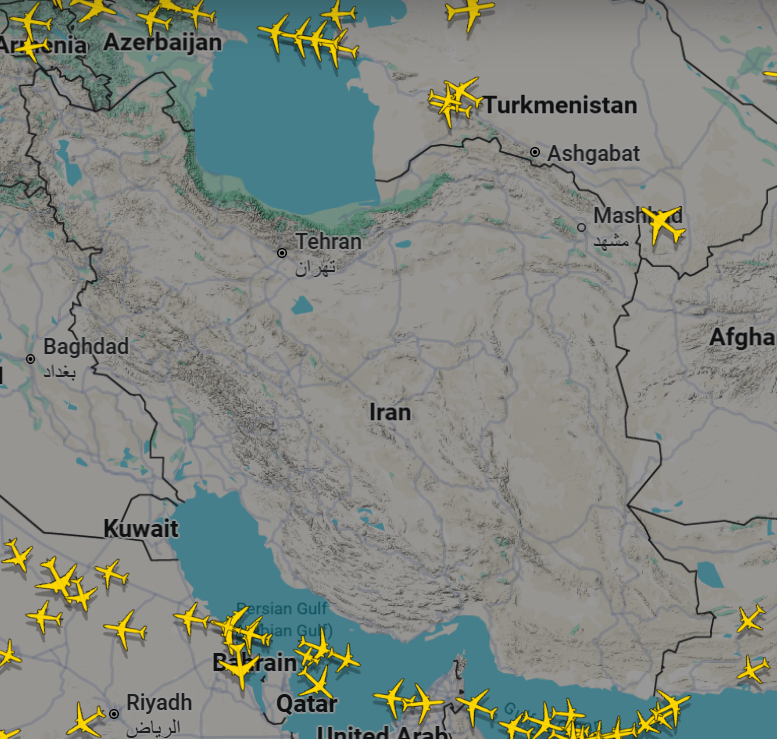
Saudi Arabia publicly condemned the strikes but has 43+ US military aircraft visibly at Prince Sultan Air Base, including AWACS essential for coordinating large-scale air operations. Jordan officially denied allowing overflight but reporters witnessed interceptions in Jordanian airspace consistent with its June 2025 pattern. Iraq immediately closed airspace — consistent with coordinated notification of incoming cruise missile traffic.
The corridor is clear: US-Israeli strike packages routed through Jordanian, Saudi, and Iraqi airspace with tacit accommodation, regardless of public statements.
The strikes were planned for months. An Israeli defense official confirmed “attacks had been planned for months and the launch date decided weeks ago, even as the US and Iran carried out negotiations.”
Nuclear trigger: An IAEA confidential report dated February 27 confirmed the agency cannot verify whether Iran has suspended all enrichment. Iran retains 440.9 kg of uranium enriched to 60% purity — enough for up to 10 weapons if further enriched. Approximately 400 kg is unaccounted for, likely buried in Fordow and Isfahan tunnel complexes.
Reconstitution evidence: Satellite imagery showed sealed tunnel entrances at Isfahan, accelerated construction at the deeply buried Pickaxe Mountain facility south of Natanz, and a suspicious concrete structure at Parchin consistent with a high-explosives containment vessel. Iran was establishing sanctions-bypassing supply chains from China for missile solid fuel.
Diplomatic failure: Three rounds of indirect US-Iran talks — Muscat February 6, Geneva February 17, Geneva February 26 — all failed. The February 26 round ended without breakthrough. On February 27, Trump said he was “not happy” with negotiations. Talks were running parallel to military preparation, not as an alternative.
US-Israel coordination was extensive. Israeli intelligence chief Shlomi Binder met senior Pentagon, CIA, and White House officials in the days preceding the strike. CENTCOM Commander Admiral Brad Cooper — who unusually sat in on the February 6 Muscat talks — briefed Trump on military options.
VP Vance met the Omani mediator on the afternoon of February 27 — hours before strikes launched. The talks were theater.
Russia condemned the strikes but is not expected to militarily defend Iran — consistent with its passive posture during the June 2025 war. China “firmly condemns” and pushed UN ceasefire resolutions but offered no military intervention. Both are in active non-alignment mode.
No NORAD posture change has been publicly reported. Iran does not possess missiles capable of reaching North America, but unconventional threat vectors (offshore launches, drone swarms, cyber) are real.
Canadian military assets in the region are minimal: 17 personnel in Iraq via Operation IMPACT, headquarters staff at CENTCOM, and liaison personnel in Jerusalem. Canada is not a combat participant.
Brent crude surged 7-13% intraday to $78.50. Goldman Sachs projects Brent could peak just over $90. A Strait of Hormuz closure scenario pushes past $100.
For Alberta separatism, this cuts both ways. Higher oil prices boost Alberta’s fiscal position and economic confidence — the core emotional driver of sovereignty sentiment. The APP’s separation petition needs 177,732 signatures by May 2, 2026 for an October referendum. An oil price windfall strengthens the “we don’t need Ottawa” narrative economically.
But the counter-pressure is stronger in crisis moments. Two-thirds of Albertans would currently vote to stay in Canada. National security crises historically increase federalist sentiment. The separatist argument that Alberta would be safer as a US partner is complicated by the fact that the US just started a war. If oil spikes to $90+, Alberta’s economic case for sovereignty gains credibility even as the geopolitical case weakens.
First — Iran’s retaliatory timing and targeting. The IRGC has promised crushing retaliation. Al Udeid, Muwaffaq Salti, and Prince Sultan are highest-probability targets. The window for Iranian response is 2 to 24 hours based on June 2025 precedent.
Second — Hezbollah’s decision. Strikes near Khamenei’s office may have crossed the stated red line. If Hezbollah activates its remaining precision-guided munitions, this becomes a multi-front regional war overnight.
Third — the Strait of Hormuz. Any disruption to the strait’s 21 million barrels per day of oil transit sends crude well past $100 and triggers a global economic shock. Gulf state bypass capacity of approximately 6.5 million bpd via pipeline is not enough to offset full closure.
The Pentagon’s 7-10 day sustainability window is the clock on everything. If the operation cannot achieve its objectives within that timeframe, the US faces either emergency escalation or a premature halt that leaves Iran wounded but not neutralized — the worst possible outcome.
 Operation Epic Fury: US-Israel Strikes on Iran – February 28, 2028, 0910 UTC Situation Report 2
 B-2 Bombers at Diego Garcia: U.S. Escalates Toward War with Iran Amid Houthi Conflict and Israeli Strikes
 The Slaughter Is the Strategy: Israel’s Iranian Uprising Gambit and the Logic of Managed Collapse
 Eagles in the Sand: How the China–Egypt Air Force Drill Shattered the Illusion of Israeli Hegemony



[…] Twitter) account. This is distinct from Israel’s operational codenames — “Operation Roar of the Lion” (Netanyahu’s designation) and “Operation Shield of Judah” (IDF’s […]