Address
304 North Cardinal St.
Dorchester Center, MA 02124
Work Hours
Monday to Friday: 7AM - 7PM
Weekend: 10AM - 5PM

Address
304 North Cardinal St.
Dorchester Center, MA 02124
Work Hours
Monday to Friday: 7AM - 7PM
Weekend: 10AM - 5PM
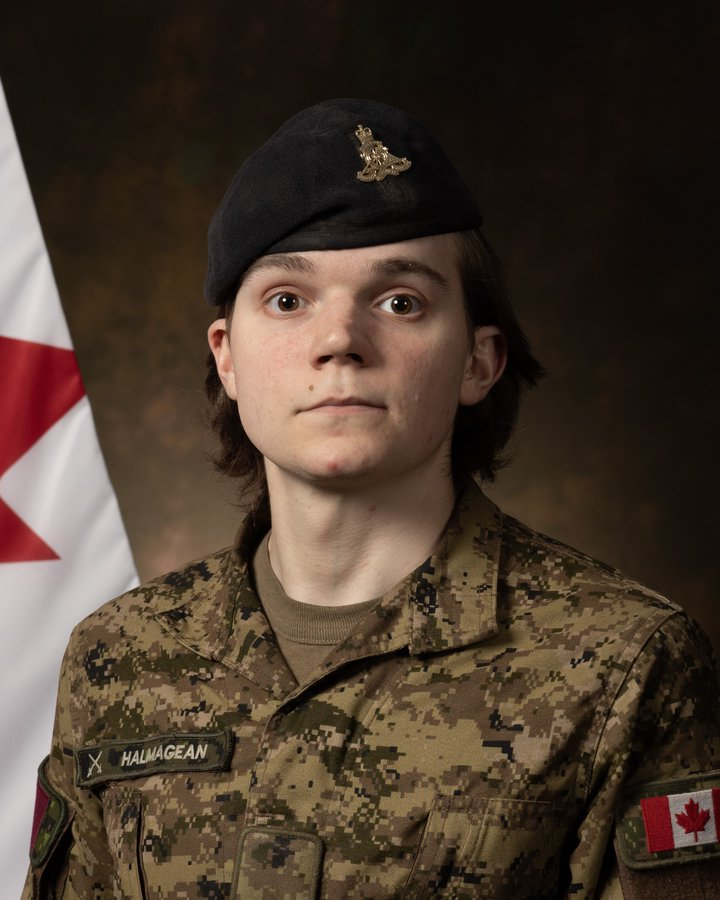
First, and foremost, Prime Rogue Inc and its partner The Signal Cage provide their condolences to the families of Gunner Sebastian Halmagean, Warrant Officer George Hohl, and Captain Aaron Wideman. They are Canadian heroes who gave their lives defending Canadian values, which are human values, and whose service we must never forget. Over the course of the investigation described below, Prime Rogue and the Signal Cage will proceed in a manner that is respectful of the families of these three heroes, and will not solicit any undue attention in relation to them. May these Canadian heroes rest in peace.
The Department of National Defence confirmed late Friday that Gunner Sebastian Halmagean died Thursday near Riga, Latvia, becoming the third Canadian Armed Forces member to die during Operation Reassurance in just over a year.
The 27-year-old artillery gunner from Hamilton, Ontario, was on his first overseas deployment, having served in the Canadian Armed Forces for nearly three years. He was posted to the 4th Artillery Regiment (General Support), Royal Canadian Artillery, based at CFB Gagetown, New Brunswick.
It’s a statement that’s becoming grimly familiar.
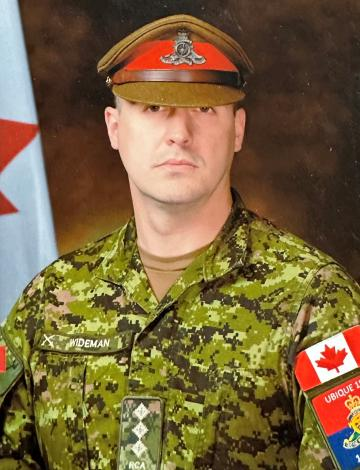
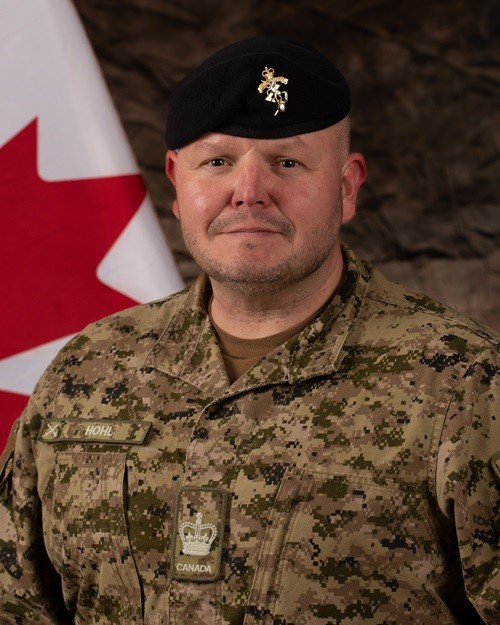
This article is the first in an ongoing investigative series examining mortality rates, institutional transparency failures, and mental health support adequacy for Canadian Forces deployed to Latvia. Prime Rogue Inc., in collaboration with OSINT News Publisher the Signal Cage has filed comprehensive Access to Information requests and will publish findings as data becomes available.
Between October 13, 2024, and January 29, 2026—a span of just 473 days—three Canadian soldiers died during Operation Reassurance in Latvia. With a weighted average contingent of approximately 1,700-2,000 personnel deployed during this period, this translates to a mortality rate of 1.36 deaths per 1,000 personnel per year.
At first glance, this may seem like dry statistics. It’s not.
These numbers reveal a peacetime NATO mission experiencing death rates that exceed both civilian mortality and the Canadian Armed Forces’ own peacetime average—all while maintaining near-total institutional opacity about causes, circumstances, and systemic factors.
Operation Reassurance’s death rate (1.36 per 1,000 per year) is 14% higher than the Canadian Armed Forces’ overall peacetime mortality rate of approximately 1.2 per 1,000 per year.
Read that again: A single focused deployment in a stable NATO ally nation is experiencing higher mortality than the CAF average across all personnel, all locations, and all contexts.
The CAF peacetime rate includes:
It’s a baseline that captures every type of peacetime military death across approximately 68,000 active personnel spread across Canada and multiple deployments worldwide.
Operation Reassurance—a mission characterized as “deterrence” and “assurance”—is exceeding that baseline.
Operation Reassurance personnel are dying at 1.39 times the rate of their civilian peers back home—a 39% elevation.
Put bluntly: Young, physically fit, trained military personnel deployed to a peaceful NATO ally are dying at significantly higher rates than the general Canadian population in the same age group.
This isn’t combat. This isn’t a war zone. This is Latvia—a stable European democracy, NATO member since 2004, EU member since 2004, with modern infrastructure and medical facilities.
Yet Canadian soldiers there are dying faster than civilians in Canada.
Operation Reassurance’s rate (1.36 per 1,000) represents more than one-quarter of the Afghanistan combat death rate.
While significantly lower than active combat, this comparison is sobering for a mission officially described as “deterrence,” “capacity building,” and “enhanced forward presence.”
Personnel are dying at more than one-quarter the rate of Canada’s most intensive recent combat deployment—a deployment that had:
Latvia has none of that despite running at more than a quarter of Afghanistan’s casualty rate.
Here’s what makes these statistics damning rather than merely concerning:
Afghanistan (5.27 per 1,000/year):
Latvia (1.36 per 1,000/year):
The death rate is 26% of Afghanistan’s. The transparency is 0%.
If the current rate continues, Operation Reassurance will experience approximately one death every 158 days.
Over the mission’s renewed three-year mandate through 2029, this projects to approximately 7 additional deaths—seven more families receiving Friday night press releases with no details, seven more investigations producing no public findings, seven more opportunities for DND to learn nothing and change nothing.
When pressed about Latvia deaths, DND will likely characterize them as “routine peacetime losses” or “within expected parameters for deployed operations.”
The statistics prove otherwise.
These deaths are occurring at rates that are:
A mortality rate elevated above both military peacetime averages and civilian populations demands:
Instead, DND provides boilerplate statements and institutional silence.
Prime Rogue Inc., in collaboration with the Signal Cage, is pursuing the following lines of inquiry through Access to Information requests and investigative research:
Mental Health Support Adequacy:
Operational Stress Factors:
Institutional Response Patterns:
Comparative Analysis:
This investigation will document whether Canada’s elevated mortality rate is accompanied by elevated institutional accountability—or whether soldiers are dying at higher rates while receiving less transparency than they deserve.
The statistical analysis is clear: Something is wrong in Latvia. The question is whether DND will acknowledge it, investigate it honestly, and fix it—or continue the pattern of institutional opacity that serves everyone except the families of the fallen.
Methodology: Mortality rates calculated using weighted average deployment of 1,700 personnel over October 2024-January 2026 period (accounting for contingent growth from ~1,600 to ~2,200). Canadian civilian mortality rates from Statistics Canada (2021, ages 20-44). CAF peacetime rates from Defence Research and Development Canada reports (2010-2020 average). Afghanistan casualties from Department of National Defence official records (158 deaths over 12 years, average deployment 2,500 personnel).
Prime Rogue Inc., in collaboration with the Signal Cage will publish updates to this investigation as ATIP responses are received and additional data becomes available. If you have information relevant to this investigation, contact us through secure channels at [contact info].
The Canadian Department of National Defence has deployed the same playbook for all three deaths:
When Michelle Hohl broke the silence about her husband’s suicide, she articulated what many military families fear: “If I don’t speak openly about [George’s] cause of death, I feel like I’m inadvertently suggesting there’s something shameful or worth hiding about it.”
Her courage in demanding transparency stands in stark contrast to DND’s institutional reflex toward opacity.
Approximately 2,000 Canadian Armed Forces members are deployed to Latvia as part of Operation Reassurance, Canada’s contribution to NATO’s enhanced forward presence on the alliance’s eastern flank.
The mission, renewed by Prime Minister Mark Carney in August 2025 for another three years through 2029, represents Canada’s commitment to deterring Russian aggression in the Baltics. Canadian forces lead the NATO Multinational Brigade-Latvia, with troops from over a dozen allied nations.
The mission includes:
It’s a high-operational-tempo deployment with regular exercises, training rotations, and the stress inherent to being a “tripwire” force on NATO’s eastern edge.
The Canadian Armed Forces publicly promotes robust mental health support systems:
But the critical questions remain unanswered:
Michelle Hohl’s public statement suggests the system failed her husband. The institutional silence suggests DND has no interest in examining whether these are systemic failures.
As of this publication, Latvian media outlets—including LSM.lv (Latvia’s public broadcaster) and Delfi.lv—have not reported Halmagean’s death.
This is notable given that:
The information vacuum extends to both Canadian and Latvian sources, raising questions about coordination between the two nations’ defence establishments regarding public disclosure.
Prime Rogue Inc. is filing Access to Information requests for:
We expect the standard delays, redactions, and institutional resistance. The logs don’t lie, but DND will do everything possible to keep them hidden.
For families with loved ones deployed to Latvia, the pattern is clear and terrifying:
If something happens to your family member, you will be kept in the dark.
The institutional default is opacity. Investigations drag on with no public accountability. Causes of death become state secrets. The only way families learn the truth is if they fight for it—or if, like Michelle Hohl, they decide to speak publicly despite institutional pressure to remain silent.
This is not transparency. This is not accountability. This is institutional self-protection masquerading as “respect for investigations.”
Why won’t DND disclose:
The answer is always the same: “investigation ongoing,” “respect for family privacy,” “operational security.”
But operational security doesn’t prevent disclosure of suicide statistics. Family privacy doesn’t prevent discussion of systemic issues. And investigations that never produce public findings aren’t investigations—they’re cover-ups.
As Canada remilitarizes because of the existential threat posed by the United States, and as Canadian Civil Defence grows as a priority,
Prime Rogue Inc. will continue tracking this story through:
We will publish updates as information becomes available through official and unofficial channels.
If you or someone you know is struggling:
If you have information about mental health support gaps, institutional failures, or other concerns related to Operation Reassurance, you can contact us securely through our encrypted channels.
Your story matters. The truth matters.
The logs don’t lie—even when institutions do.
 A Six-Month Plan for Canadian Military Independence: Breaking U.S. Dependency & Strengthening NATO
 The Fifth Column – Enemies Within and the Maple MAGA Problem
 America’s Collapse Is Not a Canadian Tragedy—It’s a Canadian Reckoning
 Canada at a Crossroads: Breaking Free from U.S. Dependence with the Finnish Total Defence Model



[…] is the third Canadian Armed Forces member to die during Operation Reassurance in Latvia since October […]
[…] organization’s web infrastructure. The Office of the Information Commissioner of Canada, the Department of National Defence, Innovation, Science and Economic Development Canada, and the Royal Canadian Mounted Police have […]