Address
304 North Cardinal St.
Dorchester Center, MA 02124
Work Hours
Monday to Friday: 7AM - 7PM
Weekend: 10AM - 5PM

Address
304 North Cardinal St.
Dorchester Center, MA 02124
Work Hours
Monday to Friday: 7AM - 7PM
Weekend: 10AM - 5PM
On a serene summer day, crowds gather casually – at a music festival, a bustling farmer’s market, even a small community barbecue. Unbeknownst to them, a few hundred feet above, a tiny quadcopter drone hovers silently. In an instant, this innocuous gadget could drop a lethal payload or dive straight into the crowd, turning a peaceful gathering into carnage. This is not science fiction or paranoid fantasy; it is an inevitable reality of modern terrorism. Security experts have warned for years that the drone will always get through, and that attacks using drones are a matter of when, not if. Yet despite these warnings, society remains disconcertingly unprepared for the havoc that even a single commercially-available drone can unleash from the sky.
The threat of terrorist-operated drones against “soft targets” – everyday public gatherings and critical infrastructure with minimal defenses – is escalating. Drones provide terrorists a third dimension of attack, an aerial angle that most security measures barely consider. We guard our perimeters and checkpoints on the ground, but few look to the sky (the neglected Z-axis of security). This blind spot is precisely what makes drone attacks so likely and potentially devastating. A small unmanned aerial vehicle can slip over fences, evade watchful eyes, and strike from above with little warning. In the words of one of the author’s former colleague now working in law enforcement, if drones are “in the wrong hands and used maliciously, they can be an incredible threat, because there’s really no mechanism in place… to detect them and to stop them”. It is chilling to realize that even now, we mostly rely on someone dialing 911 to report a rogue drone overhead.
This report dives into the impending menace of drone terrorism, focusing on Canada while drawing lessons from global cases. We will explore how military employment of drones paved the way for non-state actors, why terrorist use of off-the-shelf drones is effectively inevitable, and how such attacks could yield outsized impact – potentially even worse than 9/11 in their diffuse psychological terror. We’ll assess the glaring lack of preparedness, from incoherent regulations to technical hurdles in drone defense. Specific agencies and stakeholders who have dropped the ball will be called out by name. Finally, we’ll outline urgent recommendations for government, industry, and individuals – because mitigating this threat requires action at all levels, and it requires it now. It is nothing short of astonishing that we have not yet seen a major drone-based terror attack on North American soil. That grace period may be running out, and complacency is no longer an option.
Drones earned their violent pedigree on the battlefield long before they became toys for hobbyists. Modern militaries pioneered the use of unmanned aerial vehicles (UAVs) for surveillance and precision strikes – thus proving the concept that an aircraft with no pilot on board can deliver lethal force. The United States famously used Predator and Reaper drones to hunt high-value targets in Afghanistan, Iraq, and beyond, normalizing the idea of death dealt by remote control. Other nations followed suit; by the late 2010s, over a dozen countries had armed drones in service. This military trend telegraphed a simple lesson to the world: drones work. They can surveil from above, strike with precision, and penetrate defenses that would thwart conventional attacks.
It was only a matter of time before insurgents and terrorists adapted the same tools for their own purposes. In conflict zones across the Middle East, Africa, and Eurasia, armed non-state groups began deploying drones – first for reconnaissance, and soon enough for attacks. In Syria and Iraq, ISIS became notorious for its fleet of hobbyist drones repurposed to drop grenades on troops. U.S. commanders in 2016 called ISIS’s drone threat “the most daunting problem” facing coalition forces at the time. That was a remarkable statement – a medieval-era death cult with no air force was giving the world’s greatest militaries a headache using $1,000 quadcopters bought online. The Islamic State not only rigged drones to carry explosives, it also used them as a propaganda tool, filming battles and suicide bombings from the sky to enhance their psychological impact. Other groups innovated with different styles: Iran-backed militias like Hezbollah and the Houthis employed larger “kamikaze” drones laden with explosives that would dive into targets and detonate on impact. The Houthis in Yemen, for instance, have repeatedly used drones (and drone-like cruise missiles) to attack Saudi Arabian oil facilities and even shipping lanes. Hamas, too, joined the fray; during its October 7, 2023 onslaught in Israel, Hamas drones knocked out observation towers and surveillance posts, aiding militants in breaching Israeli defenses.
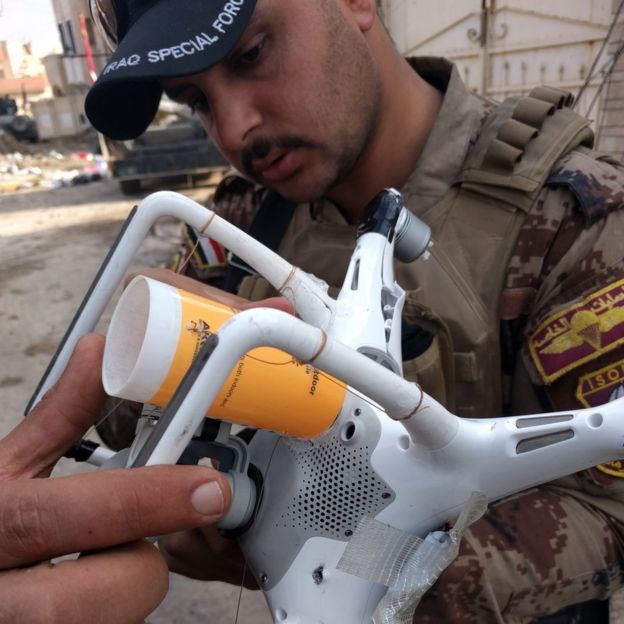
These developments in far-off war zones may feel removed from daily life in Canada or the West. But they should serve as an unheeded alarm bell. The tactical successes of drones on the battlefield demonstrate their effectiveness. If well-funded militias and ragtag extremists alike can pull off drone strikes in conflict regions, there is little technical barrier to doing the same in peaceful cities. In fact, the diffusion of drone warfare tactics is already underway. The bloody lessons learned in Mosul, Aleppo, and Donbas are being shared on the internet, in terrorist chatter, and via state sponsors. Analysts note that multiple non-state actors are rapidly learning from each other’s drone experiments – forming a sort of “drone jihadist open-source learning environment”. When Iran’s proxy militia Kataib Hezbollah successfully blew up an American base in January 2024 using a drone in Jordan (killing 3 and injuring 47), there was immediate consensus in defense circles that this was just the beginning of a new era. The drone age of terrorism had arrived.
The use of commercial/civilian drones by terrorist actors is not a vague theoretical risk – it is inevitable given the convergence of technology, motivation, and low barriers to entry. For a would-be attacker, drones present an ideal storm of advantages. First and foremost is accessibility. What used to be advanced military hardware can now be bought by anyone with a few hundred dollars and an Amazon account. The global market is flooded with highly capable off-the-shelf drones: quadcopters that can carry a small payload, with GPS guidance, high-definition cameras, and easy flight controls. Many are literally plug-and-play flying machines. As RAND analyst Colin Clarke observed after an attempted drone assassination of Venezuela’s president, “the barriers to entry have never been lower” for individuals to obtain lethal aerial technology. Hobby drones are small, lightweight, easy to learn to fly, and increasingly autonomous. A lone actor can practice in their backyard and become proficient in piloting a drone within days or weeks. They can also find a plethora of online tutorials – including videos made by hobbyists and (disturbingly) by terrorists themselves – demonstrating how to modify drones to drop explosives or coordinate swarmsrand.orgrand.org. In short, the know-how is open-source and out there for anyone inclined to look.
Second, drones give attackers stand-off capability and a reduced risk of getting caught. A drone can be launched from hundreds of meters or several kilometers away from the target, allowing the perpetrator to remain at a safe distance. Unlike a suicide bomber or gunman, the operator isn’t physically present at the scene of the attack. This not only improves the chances of escape but also complicates law enforcement response – by the time an explosion occurs, the perpetrator might already be elsewhere, controller in hand. Drones can even be programmed to navigate waypoints or use “fly-by-camera” modes, theoretically allowing an attack to be carried out on autopilot or even by pre-programming (though full autonomy is still a developing capability). The bottom line: drones empower a single terrorist to project force remotely, a capability once reserved to powerful states.
Third, and related, drones add a novelty/psychological effect that plays into terror aims. An attacker who drives a truck bomb into a building or opens fire in a mall is horrific but familiar; authorities train for these scenarios. A drone attack, on the other hand, would sow confusion and fear simply because it’s new and unexpected. The image of explosives raining down from a buzzing quadcopter or a drone diving out of the clouds evokes a sci-fi horror that could deeply unsettle the public. Propaganda outlets affiliated with ISIS have explicitly recognized this psychological value – circulating posters showing drones menacing Western city skylines and sporting events. They understand that the spectacle of a drone strike – possibly caught on the drone’s own camera and disseminated – amplifies the terror far beyond the immediate damage.
Indeed, we have already seen foreshadowings of terrorist drone use outside of conventional war zones. In August 2018, two drones armed with explosives were launched in an attempt to assassinate Venezuelan President Nicolás Maduro during a military parade. In a dramatic scene captured on video, one drone detonated near the VIP stage, panicking the assembled soldiers and sending them scattering (Maduro was unharmed by sheer luck)rand.org. That incident was a proof of concept that high-profile assassination or mass-casualty attempts via drone are feasible even in urban settings. Likewise, U.S. law enforcement has disrupted plots on a smaller scale: for example, in 2024 the FBI arrested an American extremist who had built improvised explosives to strap onto a drone and planned to crash it into an Illinois power substation. He even posed in a skull mask with his drone and pipe bombs – a macabre snapshot of emerging domestic terrorism. In another case, a supposed lone wolf flew a drone over a crowded rally for U.S. President Donald Trump in 2020, just before attempting to attack the event on the ground. The drone may have been scouting or intended as a distraction, illustrating how even major protected events can be penetrated by a small UAV. These cases underscore that the intent and attempts are already here. So far, sheer fortune and law enforcement vigilance have averted tragedy. But betting on continued luck is a losing strategy. As one Illinois intelligence bulletin flatly stated: there is no known mechanism to reliably detect or stop a malicious drone in flight. People like Bill Kushner, a police consultant, openly admit that a successful drone attack on U.S. soil will happen in the future. Canadian authorities would be wise to harbor the same assumption.
If a terrorist does choose to unleash a drone on a “soft target,” what would make that especially devastating? The sad truth is that soft targets are sitting ducks for aerial attack. By definition, soft targets are places with little to no specialized security – think open-air concerts, marketplaces, houses of worship, schools, sports games, or tourist attractions. They are “soft” because they prioritize openness and access; many are everyday spaces in a free society. While security at such venues might consider active shooters or ground-based explosives (bag checks, CCTV, patrols, etc.), very few have any provisions for threats coming from above. Humans are conditioned to threats at eye level; a tiny drone descending from the sky simply does not trigger the same instinctual alarm until it’s too late.
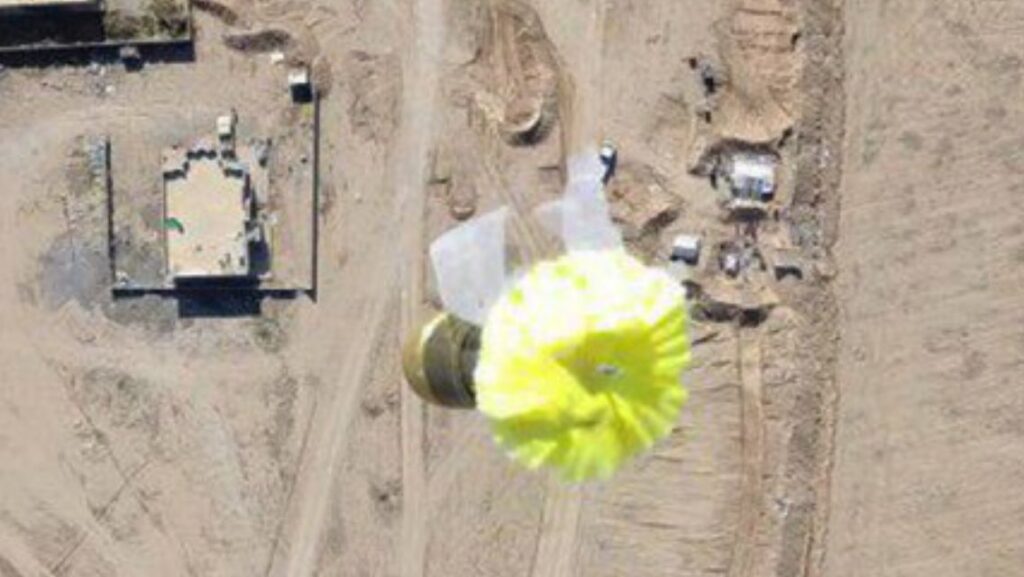
Drones exploit this element of surprise and high ground. An attacker can pilot a drone to hover above a crowd where it’s hard to notice – perhaps blending into the sky at dusk or positioning just above bright lights where people can’t easily spot it. If someone does see it, they might assume it’s a news camera drone or a harmless hobbyist (especially since drones are becoming common sights at events for photography). By the time anyone realizes the drone is hostile, it may have already dropped a grenade or dived toward the target. Consider a scenario: a drone about the size of a breadbasket, carrying a modified grenade or a couple of sticks of dynamite, hovers 50 feet over a busy outdoor café. The crowd’s first sign of trouble might be a small object dropping straight down, followed by a deafening blast and shrapnel tearing through victims. Panic would erupt. People instinctively run, not knowing where to go because the threat came from nowhere and could strike again. A single modest explosion in a packed area can injure dozens and cause lethal stampedes as everyone flees in terror. If multiple drones were used in coordinated fashion – say three or four drones hitting different sections of a music festival – the confusion and chaos would multiply exponentially.
Even when drones don’t inflict mass casualties, they can produce outsized psychological effects. Crowd dynamics are fickle; something as simple as the sight of a suspicious drone can spark fear. In 2017, a much smaller scare occurred in New York when a hobby drone accidentally crash-landed into the stands at the U.S. Open tennis tournament – no one was hurt, but the sudden appearance of a drone in a supposedly secure venue made headlines. It doesn’t take much imagination to envision how fear alone can be a weapon: a public aware of drone threats might overreact at any drone sighting. As one security firm noted, “in the worst-case scenario, the mere sight of a suspicious drone could trigger panic, causing a stampede.” In other words, terrorists might achieve their goal (instilling terror and disruption) even if the drone attack fails or causes minimal physical harm. The ambiguity itself – is that drone overhead benign or about to drop a bomb? – can chip away at the public’s sense of safety.
Furthermore, drones can be tailored to different types of mayhem. A nightmare scenario often discussed by counter-terror experts is the use of a drone to disperse chemical or biological agents over a crowdrand.org. A small drone with a crop-sprayer attachment could theoretically mist a lethal toxin over people in a parade. While technically challenging and thus far not seen outside militant rhetoric, the mere possibility contributes to the “WMD terrorism” aura that amplifies fear. More pragmatically, drones can also directly target critical infrastructure in ways that hurt many people indirectly. A coordinated drone strike on electrical substations, for instance, could knock out power to tens of thousands (the 2024 foiled Illinois plot was exactly this – aiming to destroy an energy facility). Imagine multiple city blackouts, or an attack that triggers an explosion at a chemical plant – these could rival the economic and psychological impact of 9/11, even if casualties are lower, by creating cascading crises and long-term public anxiety.
Finally, consider the diffuse, pervasive nature of the drone threat versus a one-off attack. Nineteen hijackers executed the 9/11 attacks in a single morning, and as horrific as that was, it was a contained incident. But what if those 19 terrorists had 19 drones and struck different cities and towns over several weeks? This is the dystopian prospect with drones: a few individuals, or even a lone wolf, can conduct a serial terror campaign hitting random locations at random times. One day it’s a drone bombing a suburban street festival; the next week, another drone flying into a busy downtown intersection. Low-cost drones make such repeat attacks feasible. Society could be terrorized into paralysis not by one massive strike, but by the fear that anytime you gather outdoors, a mechanical hawk of death might swoop down. In this sense, drones could achieve what terrorists always fantasize about: making people too afraid to go about their daily lives, achieving a level of terror that truly exceeds 9/11. It’s a grim thought, but one we must confront head-on in order to prevent it.
If drone attacks are such a looming menace, one would hope that security agencies and venue operators are aggressively preparing defenses. The uncomfortable truth is that we are nowhere near ready. Current countermeasures and regulations lag far behind the threat, leaving public spaces effectively unshielded. The reasons are both technical and bureaucratic – and they amount to a failure of imagination and initiative by those charged with public safety.
On the technical side, detecting and stopping a small drone is a fiendishly hard problem. Your typical threat drone – say a DJI Phantom or similar quadcopter – is only a few pounds of plastic and lithium batteries. It’s small (about the size of a large bird), often painted white or gray, making visual spotting difficult especially against a cloudy sky. It has a minimal radar signature; these drones are designed to be low-observable to avoid collisions, which ironically means they are also hard to pick up on conventional radar used for planes. Acoustic detection (listening for the hum of rotors) works only at close range and can be drowned out by ambient noise (imagine trying to hear a drone over the din of a sports crowd). Some advanced detection systems use radio-frequency scanners to sniff the control signals or the drone’s own Wi-Fi link, but this requires deploying specialized sensors everywhere you want to protect, which is costly and complex. And even if you detect a rogue drone, the question becomes how to stop it mid-flight. Shooting it down with firearms raises obvious risks: stray bullets in an urban area are not acceptable. Using a bigger anti-aircraft weapon is overkill and absurd in a civilian environment. Some law enforcement units have tested capturing drones with net guns or training eagles to snatch them – yes, literally attack eagles – but these methods are limited to short range and single targets. Jamming the drone’s signal is a more plausible tactic; if you disrupt its control or GPS, many drones will go into fail-safe and land or hover. However, broad RF jamming is a double-edged sword: it can knock out Wi-Fi, cell signals, and police radios in the area. It’s also illegal for most actors in many countries (more on that below). Newer “directed energy” options like high-powered microwave or lasers are being developed, but they are expensive, bulky, and not widely deployed outside of military contexts.
The upshot is that if someone launched a drone attack tomorrow in a Canadian city, the likely outcome is that no one could do much to prevent the first strike. At best, authorities might scramble helicopters or deploy a hastily assembled response for follow-on drones (and that’s if they even recognize what’s happening in time). Bill Kushner, the former police chief quoted earlier, was not exaggerating when he said there is “no mechanism in place” to reliably stop malicious drones today. We largely lack a last line of defense once a drone is inbound – a stark contrast to, say, a gunman scenario where armed officers can intervene. This is a major asymmetry favoring the attacker.
Equally troubling are the bureaucratic and regulatory failings that have left us exposed. In Canada, the regulatory framework for drones is primarily geared toward hobbyists and commercial operators, emphasizing safety and privacy. Transport Canada (TC) has a plethora of rules under its Canadian Aviation Regulations (Part IX for RPAS – Remotely Piloted Aircraft Systems) about who can fly drones, where, and how. There are categories (Basic vs Advanced operations), weight classes, requirements for pilot certificates, registration of drones over 250 grams, etc. These rules are complex and have evolved incoherently, often in response to minor incidents or industry pressure rather than a grand strategy. For example, at one point drones under 250g (about half a pound) were exempt from most rules, so people started using swarms of tiny drones – then TC hinted at requiring Special Flight Operations Certificates even for <250g in some cases, which angered hobbyists and came off as reactionary. Meanwhile, TC has introduced provisions for advanced drone operations (like beyond visual line of sight for commercial use) to promote the drone industry, but done little on the security side. The result is a byzantine set of drone rules that honest hobbyists struggle to follow – while a malicious actor can simply ignore all of it. Terrorists, needless to say, are not applying for drone pilot certificates or asking Nav Canada for permission to enter airspace. The regulatory focus on compliance means nothing to an enemy who operates outside the law. In fact, a recent analysis noted that many drones intercepted by police were unregistered and flown without a license – the operators didn’t even attempt to follow the rules. Paper rules deter only the law-abiding, not the law-breakers.
More importantly, no Canadian authority has clearly been empowered and equipped to counter rogue drones. On the federal level, there’s a patchwork of responsibility: Transport Canada can set airspace restrictions (like issuing Temporary Flight Restrictions to ban drones over a big event), but TC is not a law enforcement body and has zero rapid response capability. They rely on local police to enforce those no-fly zones. Public Safety Canada and the RCMP have a mandate to address terrorism, but again, no explicit powers around shooting down or jamming drones currently exist in their toolkits – at least not without jumping through legal hoops. Then there’s ISED (Innovation, Science and Economic Development Canada, formerly Industry Canada), which controls the radiofrequency spectrum and whose regulations prohibit the use of signal jammers by anyone other than select federal agencies. Under Canada’s Radiocommunication Act, deploying a jammer (even a small one to disable a drone) is illegal unless you’re specifically exempted by the Minister. As of now, such exemptions are rare and generally for military or maybe high-security prisons. If a private stadium owner or a city police service today procured an anti-drone jammer, using it would put them in legal peril (and potentially interfere with lots of unintended signals). This bureaucratic quagmire means that even if a drone is spotted doing something nefarious, the hands of first responders might be tied. They can’t jam it (illegal), can’t shoot it (unsafe and likely illegal use of force unless lives are immediately at risk), and don’t have dedicated anti-drone missiles (science fiction for civilian contexts). The only sure solution is to physically catch or disable the drone at the target, essentially at the last second – which is exactly the scenario we wanted to avoid.
To be fair, some progress is being made in Canada, but it’s slow and fragmented. After the notorious 2018 incident at Gatwick Airport in the UK – where reported drone sightings shut down a major airport for days, affecting 140,000 passengers – airports worldwide woke up to the drone threat. Major Canadian airports, like Ottawa (YOW), started trial programs for drone detection radar and RF trackingindrorobotics.ca. Those trials showed eye-opening results: dozens of unauthorized drones flying near airports every month, many of them tiny ones below the 250g threshold that sidesteps regulationsindrorobotics.caindrorobotics.ca. It’s great that airports are acting, since planes are also soft targets (imagine a drone getting sucked into an engine on takeoff – could be catastrophic). But these efforts are isolated. The systems protecting an airport are not installed in downtown Ottawa or over Parliament Hill on Canada Day, except maybe temporarily. The Department of National Defence (DND) and DRDC have been running counter-drone research (the “C-UAS Sandbox” program inviting innovators to test technologies). Yet these are still pilot projects; we haven’t deployed, say, drone detection around all major stadiums or given police forces the equipment to respond in real time.
In short, public and private stakeholders have, until now, done virtually nothing substantial to protect everyday public spaces from drone terror. There is a palpable sense of “it hasn’t happened here yet, so it probably won’t” – a dangerous complacency. It’s reminiscent of the pre-9/11 mindset, ignoring signs that terrorists wanted to use airplanes as missiles. Here we ignore that terrorists have openly discussed and demonstrated using drones as flying bombs. Unless action is taken, our luck will eventually run out. The barriers to mounting a defense remain high: technology is still catching up, laws and jurisdictions are muddled, and awareness is low. Unfortunately, history shows that these barriers tend only to be removed after a tragedy forces our hand. We have a fleeting chance to get ahead of the curve, to anticipate rather than react. That window is narrowing with every passing day of inaction.
Canada is often perceived as relatively insulated from terrorism, but that mindset does not hold when it comes to drone threats. If anything, Canada’s combination of high-value soft targets and lagging counter-drone readiness makes the country especially vulnerable. Let’s examine the situation candidly:
Transport Canada’s regulatory regime for drones has been a confusing journey of good intentions marred by poor execution. The rules emphasize preventing accidents (like drone collisions with manned aircraft or injuries to people on the ground), not preventing intentional attacks. They classify drones by weight (micro, small, etc.) and set operating rules – for instance, no drone flights near airports, emergency scenes, or over crowds without special permission. For a law-abiding user, these are reasonable safety measures. But to a terrorist, Transport Canada’s drone regulations might as well be satire. A would-be attacker is not going to request an SFOC (Special Flight Operations Certificate) to fly a drone over a crowded street fair; they’re going to do it illegally. The regulatory system has zero teeth against a determined malicious actor. It’s like having speed limits to stop getaway cars in a bank robbery – irrelevant. In fact, there’s an argument that overregulation of hobby drones (some call it “coherent in theory, incoherent in practice”) diverts resources away from security. Transport Canada spends time administering pilot exams and registration databases for users who pose minimal risk, while the real threats operate in the shadows. We have heavy rules for honest operators and no effective rules for bad actors.
The “incoherent” nature of TC’s approach also shows in the disjointed responsibilities. Transport Canada can restrict airspace over events (like issuing a Notice to Airmen that drones aren’t allowed over the Calgary Stampede grounds during the festival). However, guess what – someone intent on causing mayhem won’t heed a Notice. Enforcing these restrictions falls to police, but most municipal police services are not equipped to detect a small drone intruding in real time. If a rogue drone did fly over the Stampede rodeo, who would even know? Perhaps a few attendees might spot it and flag down an officer. By then it could drop a device into the grandstand. This isn’t a hypothetical scare; it’s a straightforward gap in coverage. Even major events like the Stampede, or a Grey Cup game, or a large outdoor concert, rely on the hope that no one will try something. Canadian event organizers are just starting to acknowledge this risk – some now include drone clauses in their security plans, mostly limited to “we’ll have people keep an eye out and call police if a drone appears.” It’s alarmingly minimal. Contrast this with the United States, where events like the Super Bowl or New Year’s Eve in Times Square have elaborate counter-UAS defenses (including radar, detection teams, and federal authority to disable drones if needed). Canada has no equivalent blanket authority or system. Unless the RCMP or DND quietly steps in for something like a G7 summit, our events are pretty much on their own.
Then there’s ISED and the jamming issue. If Transport Canada’s rules are the carrot (asking drone users to behave), ISED holds the stick that we’re not allowed to use. The Radiocommunication Act currently prohibits anyone from deploying jammers or spoofers that would interfere with radio signals, except the federal government itself in very specific circumstances. While this law exists for good reason (protecting critical frequencies and preventing chaos in the spectrum), it unintentionally hamstrings counter-drone work. Modern drones usually operate on common frequencies (2.4 GHz, 5.8 GHz for control links, GPS frequencies for navigation). These are the same bands used by Wi-Fi, Bluetooth, and satellite navigation that everyday life depends on. So yes, jamming them broadly could disrupt a lot of things – that’s why ISED’s blanket prohibition is in place. But here’s the catch: without some form of jamming or takeover, it’s extremely hard to stop a drone. The alternative that experts push is “cyber takeover” – essentially hacking the drone or sending a specialized signal to force it to land (companies like D-Fend Solutions market this tech). Such systems still involve emitting signals on the drone’s frequencies – which in a strict sense could be seen as interference and thus also fall under ISED’s purview. In other words, any effective countermeasure likely needs a legal carve-out. The U.S., for example, passed laws in recent years giving certain agencies authority to use counter-UAS measures that would otherwise violate communications laws. Canada has yet to pass an equivalent. There is a growing call within security circles for Canadian legislators to explicitly empower police and security agencies to act against rogue drones. This would mean amending laws to permit designated personnel to jam or commandeer drones in emergency situations (with proper training and oversight). Until that happens, even if Toronto Police spot a hostile drone, they technically lack clear authority to electronically disable it. They would have to default to kinetic options (which, as discussed, are messy). This legal limbo is an accident waiting to happen.
Finally, we must address the complacency factor. Canadian officials, both public safety leaders and political decision-makers, have not publicly emphasized the drone threat to the extent it deserves. The annual national threat assessments by CSIS or Public Safety Canada mention emerging technologies but often in passing. There is a sense that because we haven’t had a high-profile drone incident, it’s a lesser priority. This despite Canada being a close ally of countries (U.S., UK, France) that have identified drones as a top-tier homeland security concern. The cynic in me fears that only after an incident will Canada rush to “get in line” with what others have been warning. We saw a mini-version of this with the Gatwick affair – Transport Canada and Nav Canada scrambled to study airport drone detection after that scare, rather than proactively before. We cannot afford a similar reactive posture for a potential mass-casualty attack.
In summary, Canada’s current approach to drones is disjointed and dangerously behind the curve. Transport Canada’s rules don’t deter criminals; ISED’s rules deter our defenders; and no one in power seems to be losing sleep over any of it – yet. It’s time to wake up. As a nation, we need to demand better of those whose job is to foresee threats and protect the public.
It bears repeating: the scenario of a terrorist drone attack on a soft target is not a wild hypothesis – it is imminent unless we act. Experts use terms like “inevitable” and “fait accompli” to describe this threat for a reason. The convergence of factors is plain to see. We have plentiful grievances and extremist ideologies in the world (including domestic violent extremists in Canada and the U.S. who might be motivated to carry out such attacks). We have the ready availability of drones and the knowledge to weaponize them. And we have wide-open vulnerabilities in our public spaces. From the terrorist’s perspective, it’s almost too easy – one might wonder what has taken them so long. Indeed, it is somewhat surprising we haven’t witnessed a major drone attack in North America or Europe yet. Some plausible reasons: terrorist groups tend to stick with proven methods (guns, bombs) and may not fully trust new tech for critical ops; there may have been plots foiled quietly that we don’t know about; or simple luck and lack of initiative. However, relying on terrorists’ lack of creativity is a poor defense strategy. If groups like ISIS could innovate under fire in Iraq to use drones daily, it is only a matter of time before either they or their sympathizers try the same in Western cities.
Consider how quickly norms can change. Just a few years ago, the idea of a drone swarm attacking a military formation seemed far-fetched – then in 2021, a coordinated drone swarm struck a Syrian refinery, and by 2022 Russia and Ukraine were both employing multi-drone tactics on the battlefield. Technology adoption has a way of accelerating unexpectedly. The threshold for terror groups using drones in the West may soon be crossed, especially as veterans of foreign drone operations return home or inspire local cells. For example, a Canadian or European who fought with ISIS and saw drone bombs in action might eventually apply that experience back home. Or a lone actor angry at society might copy the tactics he read about online from the Ukraine war (where makeshift drone bombs have become routine).
When that first successful drone attack on a civilian target does happen, it will be a rude awakening. One can imagine the public outrage and fear. People will ask, “How did we not see this coming?” The media will run endless loop footage if available, or at least graphics of drones, spreading the fear further. If the attack is dramatic – say a drone explodes in a packed sports stadium – the comparisons to 9/11 will come easily. It won’t kill thousands like 9/11 did, but it could very well alter our way of life, at least in the near term. Just as 9/11 made air travel a gauntlet of security, a few drone incidents could make outdoor gatherings subject to new restrictions (imagine nets over open-air venues, drone detectors at every event, hobby drones outlawed within city limits, etc.). Insurance costs for events would skyrocket; some events might be cancelled altogether for fear of copycats. The societal impact could be extensive, because unlike one-and-done attacks, the drone threat lingers every day thereafter.
This sounds dystopian, but it’s important to articulate what’s at stake. The goal is not to incite undue fear – it’s to galvanize action before we reach this breaking point. If we treat the current calm as deceptive, we might aggressively implement measures that either deter would-be attackers or blunt the damage of an attempt. Security, intelligence, and policy communities in Canada need to treat this with the urgency of an imminent crisis. The clock is ticking on our drone terror “grace period.” As one U.S. homeland security report bluntly noted, terrorists are highly adaptive and “will continue to find new ways to spread fear and chaos” – drones are simply their next platform to do so. Every official I’ve spoken to or whose words I’ve read comes to the same conclusion: a successful drone attack in a western city is going to happen. Hoping to be proven wrong is not a strategy; preparing as if it’s inevitable is the only responsible course.
It’s time to get specific about who bears responsibility for the current state of unpreparedness – and who needs to act. There’s plenty of blame to go around, but also a chance for leadership if the right players step up.
Transport Canada must move beyond its myopic focus on regulating honest drone use and take a leadership role in countering malicious use. TC’s incoherent rules and sluggish adaptation have left security considerations as an afterthought. This department should spearhead a comprehensive national strategy on hostile drones, working with Public Safety and Defence. TC also needs to streamline its regulations so they make sense: emphasize technological solutions (like remote ID beacons for drones) that can aid security, rather than piling on more license requirements that do nothing against criminals. TC, you are the aviation authority – start acting like the air security authority too, not just the aviation convenience authority.
Thus far, our national security apparatus has been relatively quiet on the drone threat in public forums. This must change. Public Safety should explicitly recognize drone-based attacks as a key national threat in its assessments and allocate funding and coordination accordingly. The RCMP (and CSIS on the intel side) should intensify efforts to detect and disrupt plots involving drones – that means dedicating more analysts to monitor extremist forums for chatter about drones, working with border/customs to flag suspicious imports of drone parts or explosives, etc. Additionally, the RCMP must lobby for the tools it needs: if the law doesn’t currently let Mounties jam a drone or hack into it during an incident, the RCMP leadership should be banging on Parliament’s door asking for that authority. The RCMP’s Counter Drone Program (if such a thing exists even in pilot form) must move from powerpoint slides to fielded capability.
ISED cannot hide behind its mandate to simply “manage spectrum” as if that exists in a security vacuum. Yes, jammers and spoofers are problematic, but the agency needs to be flexible in the face of a clear public safety threat. ISED should work urgently with Public Safety to carve out legal exceptions that allow controlled use of counter-drone frequency tools by authorities. This could involve special licensing or a rapid waiver process in emergencies. ISED also should pressure industry (drone manufacturers) to implement safeguards, such as geo-fencing that actually works and cannot be easily overridden. If DJI and others have technology to keep drones out of sensitive areas, ISED and TC should enforce its usage or at least push the industry standard in that direction.
Frankly, Canada’s legislative bodies have been asleep at the wheel regarding drone threats. Compare this to the US Congress, which has held numerous hearings and passed statutes on UAS threats. Canadian MPs and Ministers need to elevate this issue. This means funding counter-UAS research and deployment in budgets, updating laws (for example, an amendment to the Criminal Code or Aeronautics Act that specifically criminalizes using drones as weapons of terror, with suitably harsh penalties, and empowers certain defensive measures). Politicians also need to hold agencies accountable: ask pointed questions like “What are we doing to protect the public from drone attacks? Why don’t police have the tools? Who is in charge during a drone incident?” If they don’t know the answers, that’s a problem. Leadership at the top can cut through inter-departmental inertia and assign clear responsibility.
At the municipal level, police forces should not shrug and say “that’s a federal issue.” A drone attack will be a local crisis first and foremost. City police and first responders must incorporate drone scenarios into their training and emergency plans. This could involve designating marksmen with appropriate equipment (like high-precision shotguns or net launchers) in case a drone needs to be taken down and it’s safe to do so. It also means public awareness campaigns: encourage citizens to report suspicious drone activity (e.g., someone repeatedly flying near a stadium days before an event could be conducting reconnaissance). For event organizers, it’s time to demand better support from authorities and also hire your own mitigation if feasible. Some large venues in the U.S. now hire counter-drone specialists for game days – Canadian venues might consider doing the same, even if it’s just contracting a company to deploy a detection system and be on standby. Yes, it’s an added cost, but consider it insurance against a catastrophic liability. Not to mention a duty of care to attendees.
This includes drone manufacturers and the burgeoning counter-drone industry. Manufacturers like DJI should continue to improve and enforce geofencing, altitudinal limits, and Remote ID features that help keep honest users in check and help authorities identify rogue ones. They’ve made some progress – e.g., DJI drones won’t fly near major airports without special unlocking – but terrorists can simply use older firmware or DIY drones to circumvent these. Still, any friction helps. The counter-UAS tech companies, many of which are startups with Canadian participation, need to tailor solutions that can be deployed in civilian contexts: low-collateral damage, user-friendly for police, and not astronomically expensive. This tech is going to be in high demand; there’s a market incentive to innovate quickly here, which in turn helps us all if the solutions improve.
Lastly, ordinary citizens have a role. Stay informed about the drone issue and don’t dismiss it as hyperbole. If you own and fly drones, follow the rules, not only to avoid being part of the problem, but also to be an extra set of eyes; responsible drone hobbyists often know the local drone scene and can spot when someone is doing something suspicious or dangerous. If you see something, say something applies to drones too: a drone hovering where it shouldn’t, or a stranger fiddling with a drone near a sensitive location, is worth reporting. We all may need to adjust expectations at events: don’t freak out at every drone, but be mindful of your exits and cover in case something does happen from above (just as we all quietly do now in an era of mass shootings). It’s unfortunate, but awareness and preparedness at the individual level can save lives in a crisis. Finally, the public should hold leaders accountable: ask your representatives what’s being done about drone threats, support policies that enhance security even if it means tighter rules on drones, and encourage investment in counter-measures. Public pressure can ensure that this issue doesn’t slip into the bureaucratic void.
Facing this looming threat requires a multipronged response. Here we outline key precautions and recommendations for various stakeholders – a roadmap to start defusing the drone danger before it strikes:
1. National Strategy and Legislation: Canada needs a clear national strategy on countering malicious drones. The federal government should convene a task force (if it hasn’t already quietly) combining Transport Canada, Public Safety, DND, RCMP, ISED, and local representatives to develop a comprehensive action plan. This should lead to legislation that explicitly authorizes counter-drone actions for law enforcement and security services. For example, a law that grants police the right to disable or intercept a drone that poses a threat, without fear of violating Radiocom laws, is essential. Additionally, update the Criminal Code to make it unequivocally illegal to weaponize a drone or use one to commit a violent crime (to ensure prosecutors have the tools to charge preparatory acts severely). Legislators should also explore requiring Remote ID transponders on drones sold in Canada – similar to a digital license plate that broadcasts the drone’s location and owner info. The U.S. FAA is implementing this; Canada should not lag behind. Remote ID won’t stop a determined terrorist (they could disable it), but it aids overall airspace awareness and will make unidentified drones stand out more.
2. Technological Defenses (Detection & Mitigation): Invest in and deploy multi-layer drone detection systems at high-risk locations. This could include radar-based systems, RF detectors that pick up drone control signals, and optical trackers. Key sites like Parliament Hill, major stadiums, and critical infrastructure facilities (power plants, bridges, etc.) should have permanent or rapidly deployable drone detection coverage. This lets authorities get early warning of an incoming drone and track its trajectory (hopefully to locate the operator as well). In terms of stopping drones, Canada should pilot the use of non-kinetic countermeasures – for instance, the aforementioned cyber-takeover systems that send a drone a command to return home or land safely. These have the advantage of minimal collateral interference if done right. In situations where jamming is the only resort, develop protocols to do it in as narrow and brief a manner as possible (perhaps new tech that can directionally jam just the drone’s receiver). Physical capture tools (net guns, net drones, or even trained birds) can be part of the toolkit especially for low-altitude scenarios. No single solution is foolproof; a layered approach is required – in military terms, a “counter-drone umbrella” over key events. The Canadian Armed Forces, which have experience with air defense, could assist in developing these concepts for civilian use.
3. Protective Design and Procedures for Venues: Event organizers and facility managers can take practical steps to reduce vulnerability. For open-air gatherings, consider installing overhead netting or canopies over critical areas (e.g., above stages, VIP sections, or dense crowd sections) where feasible, to physically block drones or at least mitigate shrapnel if something explodes above. Obviously, you can’t cover an entire festival ground, but strategic covering can limit worst-case damage. In venues like stadiums, explore if the existing roof or rigging can be augmented with anti-drone meshes (some stadiums have experimented with bird nets for pigeons – conceptually similar for drones). At the procedural level, integrate drone threats into emergency response plans: if a drone is spotted, have a protocol to pause the event, make an announcement (without causing panic) like “Security issue, please calmly proceed to covered areas or indoors,” etc., until it’s resolved. Train security staff as sky lookouts – literally assign a few personnel to scan the skies during events, especially at ingress/egress times and key moments. It sounds low-tech, but a vigilant human might catch a glint or buzz of a drone early. Educate staff on not just looking for suspicious persons in crowds, but suspicious objects flying above crowds.
Communication is also key: before and during events, use signage and public announcements to declare it a no-drone zone (as some Ontario events have done via social media reminders). This serves two purposes: it deters clueless hobbyists from accidentally straying in, and it puts would-be malicious actors on notice that folks are watching the skies. Yes, a determined terrorist won’t be dissuaded by a sign, but if they know countermeasures might be present, it could factor into their planning or perhaps cause them to hesitate. Some U.S. state fairs and events have successfully interdicted multiple drones by being proactive – e.g., Tennessee’s state fair caught four drones in five days due to vigilant enforcement of no-fly rules. That’s the model to emulate.
4. Intelligence and Monitoring: Use intelligence resources to nip plots in the bud. This means monitoring online forums (including the dark web) for chatter about weaponizing drones – jihadist groups, far-right extremists, and even disgruntled individuals might telegraph their intentions or seek advice on forums. Increase surveillance on procurement of explosives or bomb components in conjunction with drone purchases. For example, someone buying a drone and also buying large quantities of ball bearings or explosive precursors should raise alarms. Strengthen international intelligence sharing about terrorist drone use – Canada can learn from allies’ experiences in Iraq, Israel, Ukraine, etc. If a new tactic emerges (like a new way to avoid detection or a novel payload), disseminate that quickly to domestic law enforcement. Essentially, treat drone attack planning as its own category in counter-terrorism efforts, deserving specialty intelligence analysis.
5. Public Awareness & Education: The public should be brought into the conversation in a constructive way. Without causing panic, government and law enforcement can educate communities about drone dangers and how to respond. Similar to how people are taught “Run, Hide, Fight” for active shooters, we could have guidance for “If you see a drone posing a threat: Report, Seek Cover, Stay Calm.” Emphasize not taking matters into one’s own hands – e.g., do not shoot at drones on your own (besides being illegal, a falling drone or errant bullet can harm others). Instead, coordinate with authorities. Neighborhood watch programs might include drone spotting in sensitive areas. The more “eyes on the sky,” the better chance of early warning. Also, enlist the help of responsible drone hobbyist clubs – they can act as a neighborhood’s drone experts, knowing what normal recreational drone behavior looks like versus something suspicious.
6. Emergency Response Drills: First responders (police, EMS, firefighters) should incorporate drone attack scenarios into their drills. This means practicing a situation where an explosion happens from above or a device is dropped and unexploded. How to secure the area? How to communicate – keeping in mind the drone might still be overhead and could target the concentration of responders next. Perhaps have fire departments equip vehicles with an aerial lookout capability or even jamming equipment if authorized, as they are often first on scene for explosives. Hospitals too might plan for mass casualty incidents sparked by drone strikes, which could involve unique injury patterns (shrapnel from above, multiple simultaneous sites). Planning and drilling these scenarios will significantly improve the efficiency of response when it’s real.
7. Research and Development: Continue to support R&D for counter-drone tech that is effective, affordable, and safe for use in cities. This includes systems that can handle drone swarms – since the real worst-case is not one drone, but many. Swarm attacks could overwhelm current defenses, so investing in tools that can detect and disable multiple drones quickly (perhaps automated or AI-driven response) is crucial. Also, research into hardening potential targets: for instance, can we make transport trucks, fuel depots, or crowded building entrances more drone-proof? Maybe simple things like overhead tarps or better surveillance. Innovation here could come from the private sector but guided by government focus (grants, challenges, etc., such as the Sandbox initiatives).
8. International Cooperation: Drone threats transcend borders. Work with allies to share knowledge and even assets. Perhaps Canada could procure a few high-grade military counter-UAS systems that can be deployed to major events (the way the U.S. might deploy a Secret Service counter-UAS team for the UN General Assembly). Allies might lend or co-develop tech – for example, Israel, which has faced incendiary balloon and drone threats, has developed interesting anti-drone lasers. NATO has working groups on countering small drones; Canada should be a leading voice there, given we’re a country with vast open venues (think of open-air Parliament Hill events or Calgary Stampede) that are hard to cover. Maybe propose joint training exercises focusing on drone threats to soft targets.
In all these recommendations, one theme stands out: act before it’s too late. The costs of prevention – whether monetary, legal, or in slight inconveniences – are tiny compared to the cost of a successful attack followed by reactive measures in panic. We still have the benefit of learning from others’ experiences (and near-misses) rather than our own tragedy. It’s time to seize that advantage.
In the novel Neuromancer, William Gibson famously said, “the street finds its own uses for things.” Terrorists, it seems, have found their use for the multi-rotor drones that whirr innocently above our parks and homes. They see in that buzzing speck a chance to terrorize beyond the constraints of ground-based attacks – to exploit our third dimension of freedom, the open skies, as an avenue for mayhem. We ignore this looming threat at our peril. The signs of impending danger are as glaring as a drone’s flashing LED: experts shouting from the rooftops that drone terror is inevitable; real-world cases proving it can be done; our security apparatus admitting they currently can’t stop it. All the warning lights are blinking red, much as they were before September 2001, if only we had paid attention to them.
Unlike past threats, however, we have the benefit of foresight and the tools (if we choose to deploy them) to mount a defense. The situation is dire but not hopeless. This report has sketched out the dangers – from the vulnerability of soft targets to the inadequacies of our present defenses – but it has also outlined concrete steps to mitigate the risk. What is needed now is political will, inter-agency cooperation, and public vigilance. It’s a call to action for Transport Canada to overhaul its approach, for lawmakers to break the legal logjams, for police and private security to incorporate new tactics, and for each of us to attune our eyes and ears to a new kind of threat.
Let’s be clear: there is no single silver bullet to eliminate the risk of drone attacks. We will never achieve 100% security (just as we haven’t with traditional terrorism). But we can harden targets, disrupt plots, and reduce the ease with which an attacker could succeed. By doing so, we change the cost-benefit calculation in the terrorist’s mind. Perhaps we even deter some attacks entirely – if the chance of failure or interception is high, the appeal drops. And if, God forbid, an attack still occurs, a prepared society can respond swiftly to limit casualties and prevent the fear from paralyzing us as the terrorists intend.
In the end, maintaining an open, free way of life while guarding against airborne threats will be a delicate balance. We do not want to live under permanent nets or in constant fear of the sky. The drones themselves are not evil – they are tools that have brought joy, utility, and economic benefit. But as we’ve examined, in the wrong hands they become potential weapons of terror. The onus is on us to neutralize that potential without squashing innovation or personal freedoms unnecessarily. It’s a challenging policy tightrope, one that must be walked with urgency and nuance.
The clock hasn’t struck midnight yet on the drone threat. There is still time to act decisively – to ensure that when we look back after a few years without incident, we can say “We saw this coming and we rose to the challenge”, rather than “We knew and we did nothing.” The drones are out there, the terrorists are scheming, and the soft targets are exposed. This is our moment of opportunity to fortify the sky before the storm. Let us seize it, for the safety of our cities, our public spaces, and the simple peace of mind when we step outside and look up.
 Understanding the Terror Threat on Friday the 13th
 The Looming AI Catastrophe: Why Human-Like Artificial Intelligence is a Disaster Waiting to Happen
 Trump’s Antifa Terror Designation: Legally Questionable and Surely Dangerous
 Top 10 Technological Asymmetric Warfare Shocks That Shattered Military Confidence (From Naval Drone Kills to Stealth Collapses — When the System Was the Vulnerability)



[…] LNA and its primary external backer, the United Arab Emirates, had not anticipated the drone threat materializing at this speed or with this effectiveness. The UAE had been supplying Haftar’s […]